
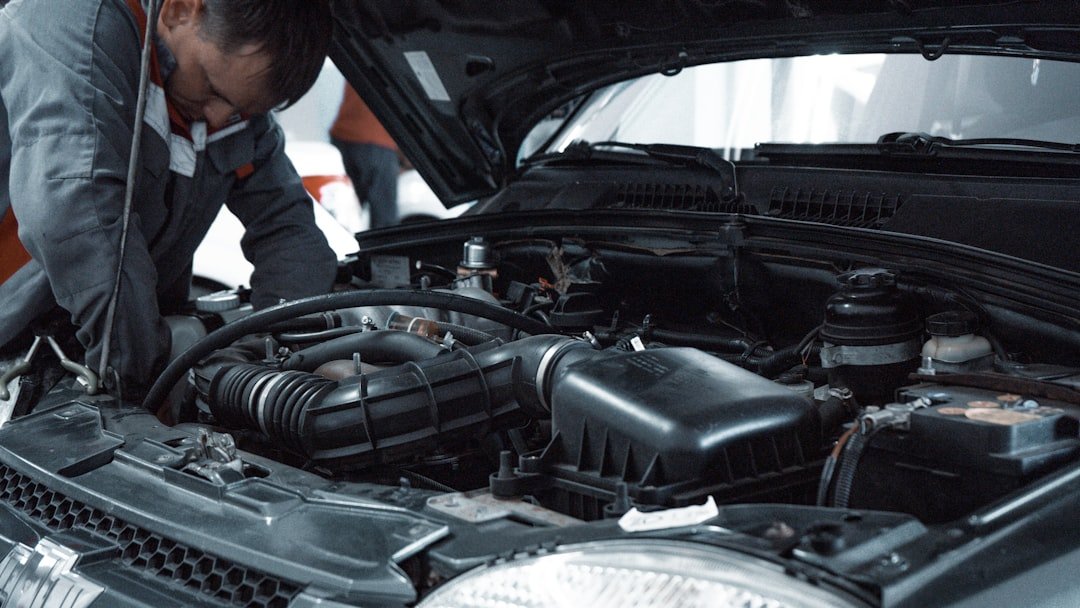
Your vehicle is likely your second-largest financial asset after your home. Unlike your home, which holds or appreciates in value over time, your vehicle depreciates — but the rate of that depreciation, and how long it remains reliably drivable, is directly influenced by how well you maintain it. A well-maintained vehicle can serve you faithfully for 200,000+ miles; a neglected one may cost you a major repair at 80,000 miles that makes you question whether to keep it at all.
At Norm’s Auto Clinic in Coweta, Oklahoma, we believe that the best repair is the one that never has to happen — because proper maintenance prevented it. This comprehensive guide covers mileage-based and time-based maintenance schedules, how Oklahoma’s unique climate affects your maintenance needs, how to keep records, and the real financial cost of deferred maintenance.

Mileage-Based vs. Time-Based Maintenance: Why Both Matter
Most drivers think of vehicle maintenance in terms of mileage — “I’ll change the oil every 5,000 miles.” But many maintenance items have a time-based component that’s just as important as mileage. This is because several fluids and rubber components degrade from age and environmental exposure regardless of how many miles are on the odometer.
Consider brake fluid: Brake fluid is hygroscopic — it absorbs moisture from the air over time. A low-mileage vehicle driven mostly on weekends may have brake fluid that’s two years old and well above safe moisture content, even at only 8,000 miles. The manufacturer’s recommendation of every 2 years applies regardless of mileage.
Consider coolant: Coolant’s corrosion inhibitors deplete over time and miles. A five-year-old coolant mixture that’s only seen 30,000 miles may be just as compromised as a high-mileage vehicle’s coolant. The time component of the service interval matters.
Consider drive belts and hoses: Rubber components age from heat cycling, UV exposure, and ozone in the air — not just use. A serpentine belt or radiator hose on a low-mileage vehicle is subject to the same time-related degradation as one on a high-mileage vehicle. Industry guidance typically recommends inspection every 4 years and replacement at 7 years regardless of condition.
The practical takeaway: always apply the more conservative of the mileage or time interval, not the more lenient. If oil change guidance says “every 7,500 miles or 12 months,” change it whichever comes first.
Manufacturer Schedule vs. Independent Mechanic Advice: Resolving the Difference
You may notice that your owner’s manual recommends certain services at intervals that experienced mechanics — including our team at Norm’s — sometimes recommend shortening. How do you reconcile the difference?
Manufacturer schedules are designed for average use in average conditions. They’re also influenced by the marketing reality that lower maintenance cost is a selling point, particularly for new vehicle buyers comparing total cost of ownership. Extended drain intervals and “lifetime” fluid recommendations serve this interest.
Independent mechanics base recommendations on what they see in real-world vehicles: transmissions that failed because their “lifetime” fluid was never changed; engines sludged up because extended oil drain intervals were followed strictly without considering the severity of the driving conditions; cooling systems that corroded from extended coolant service intervals.
Our recommendation: follow the manufacturer’s “severe service” schedule if your driving patterns qualify — which, as we’ll discuss, most Oklahoma drivers do — and consult with your mechanic for fluid services beyond what the manual addresses. A conversation during each routine service about upcoming maintenance needs takes minutes and can save thousands.
Complete Oklahoma Vehicle Maintenance Schedule
This schedule is calibrated for typical Oklahoma driving — which qualifies as “severe” service due to heat, dust, and the mix of short city trips and highway miles:
Every 3,000–5,000 Miles / 3–6 Months (Conventional Oil)
- Engine oil and filter change
- Visual inspection: tires, lights, leaks, belts (visual)
- Check all fluid levels: coolant, brake, power steering, washer
Every 7,500–10,000 Miles / 6–12 Months (Synthetic Oil)
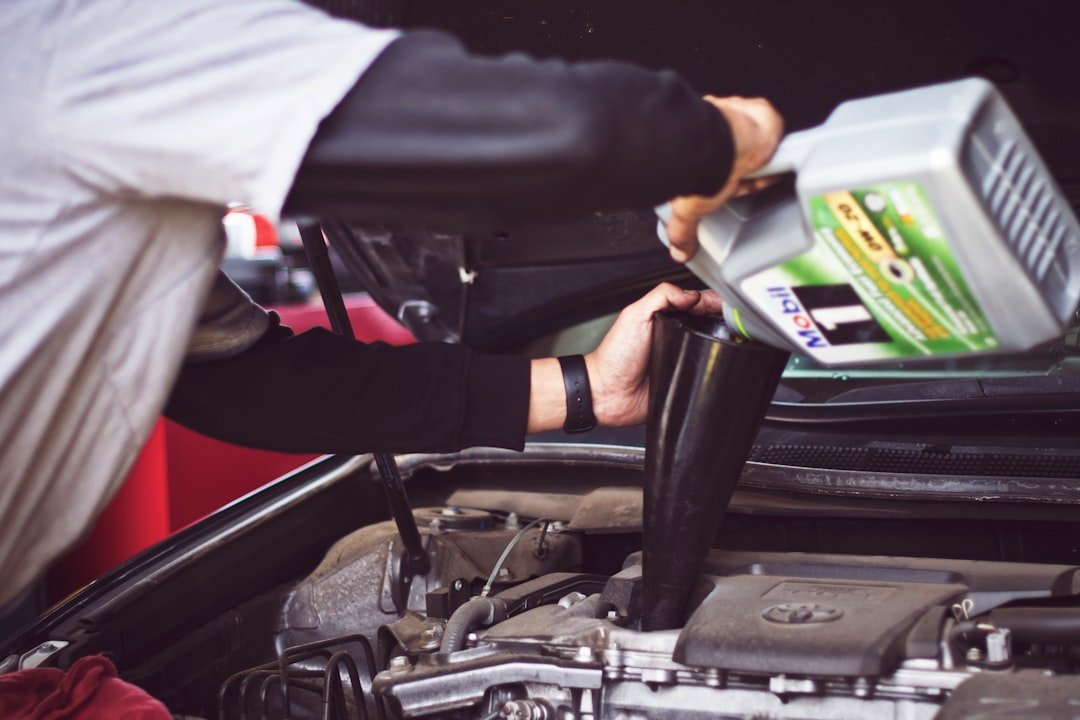
- Engine oil and filter change (full synthetic)
- Tire rotation (every 5,000–7,500 miles regardless of oil change interval)
- Brake inspection: pad thickness, rotor condition, fluid
- Air filter inspection
Every 15,000–30,000 Miles / 1–2 Years
- Air filter replacement (more often in dusty rural Oklahoma conditions)
- Cabin air filter replacement
- Fuel system inspection
- Brake fluid replacement (every 2 years regardless of mileage)
- Tire inspection and rotation
Every 30,000–60,000 Miles / 2–4 Years
- Transmission fluid service (especially in towing or city driving conditions)
- Coolant flush and refill
- Spark plug replacement (conventional plugs); iridium/platinum plugs last longer but inspect at 60,000
- Serpentine belt inspection and replacement if needed
- Power steering fluid flush (hydraulic systems)
- Differential fluid (AWD/4WD vehicles)
Every 60,000–100,000 Miles / 5–7 Years
- Timing belt replacement (if belt-driven; many modern engines use chains)
- Water pump replacement (often done with timing belt as preventive measure)
- Oxygen sensor replacement (high-mileage preventive)
- Full suspension inspection: struts, shocks, bushings, ball joints, tie rods
- Brake hose inspection and replacement if cracking detected
Oklahoma-Specific Seasonal Maintenance Additions
Before Summer (April–May)
Oklahoma summers are punishing on cooling systems and air conditioning. Before heat season, have your AC system checked for refrigerant charge and compressor function; inspect cooling system hoses and the radiator cap; verify coolant freeze protection extends to at least -20°F even in summer (a 50/50 mix provides both freeze and boil-over protection); and check battery health, since heat accelerates battery degradation just as cold weakens it.
Before Winter (October–November)
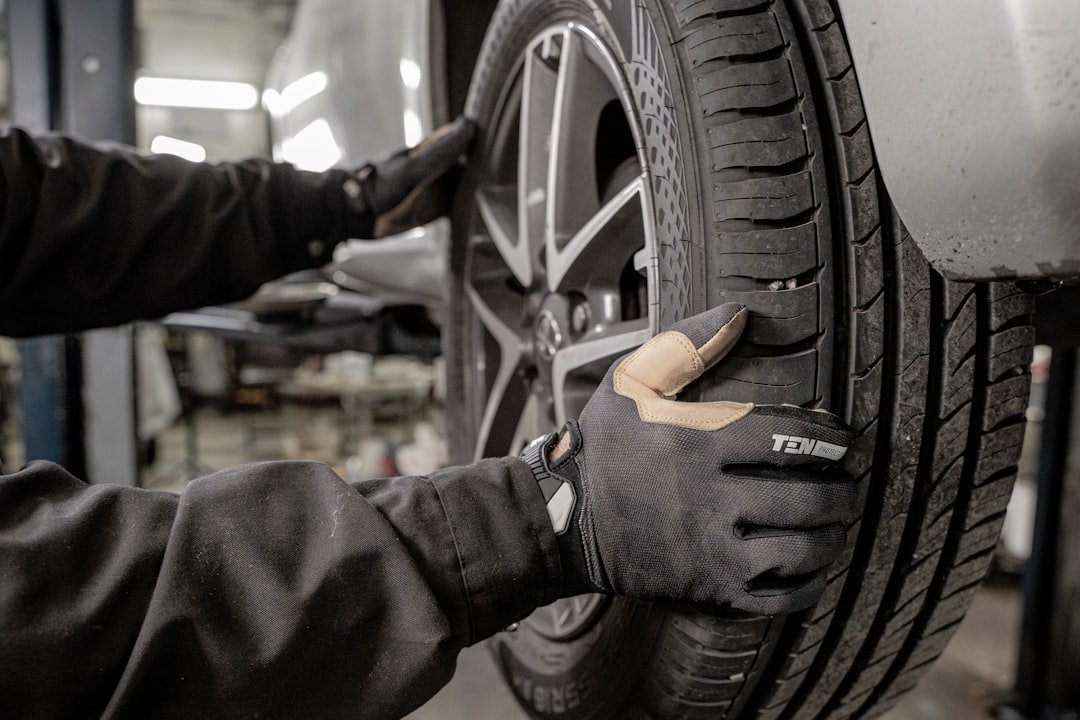
Ice storm preparation is a genuine safety priority for Coweta and Wagoner County drivers. Check battery for cold-cranking performance; inspect tires for adequate tread depth (minimum 4/32″ for winter driving); verify coolant freeze protection; replace wiper blades with winter-rated blades; and stock a basic winter emergency kit (blanket, jumper cables, ice scraper, flashlight).
After Each Oklahoma Winter
Check for undercarriage corrosion from road deicers; inspect brake components for ice-season wear; and verify wheel alignment (potholes from freeze-thaw cycle are notorious in Wagoner County roads each spring).
The Real Financial Cost of Deferred Maintenance
Deferred maintenance is rarely a money-saving strategy — it’s money borrowed against a future repair that costs far more. Real examples of what neglect typically costs:
- Skipping oil changes → engine sludge: A $60 oil change deferred too long can lead to oil sludge buildup that requires an engine flush ($150–$250) or in severe cases, engine damage ($3,000–$8,000 for repair or replacement)
- Ignoring brake squeal → rotor damage: A $150 pad replacement ignored until grinding destroys rotors, turning a $150 repair into a $400–$700 job
- Skipping timing belt → engine destruction: A timing belt replacement at 90,000 miles costs $400–$800. A broken timing belt typically destroys the engine — repair cost $4,000–$8,000 on an interference engine
- Not flushing transmission fluid → transmission failure: A $100–$200 transmission service deferred indefinitely can lead to $2,500–$4,500 transmission replacement
The pattern is consistent: every skipped maintenance service increases the probability of a significantly more expensive repair. The math almost always favors staying current on maintenance.
How to Keep Accurate Maintenance Records
Your service records are a financial asset — they demonstrate vehicle care history to future buyers and help you and your mechanic track what’s been done. Options for record-keeping:
- Physical folder in the glove box: Keep every service invoice. Simple, reliable, accessible.
- Phone apps: Apps like Fuelly, Carfax Car Care, or Drivvo let you log services with mileage and date reminders. Useful for tracking costs and setting service alerts.
- Your shop’s records: At Norm’s, we maintain a service history for every vehicle we service. You can request a record summary at any time.
High-Mileage Vehicles: Adjusting the Schedule Past 100,000 Miles
Many Oklahoma drivers are getting more mileage out of their vehicles than ever before — 150,000 and even 200,000 miles is achievable with proper care. But high-mileage vehicles have specific maintenance considerations beyond the standard schedule:
Switching to high-mileage engine oil: Formulations designed for vehicles over 75,000 miles contain seal conditioners that can reduce minor oil seepage and consumption by swelling aged seals slightly. Worth using if you notice minor oil consumption or seeping gaskets.
More frequent inspections: As rubber and plastic components age past 10 years, the risk of failure increases. Semi-annual inspections rather than annual become prudent for vehicles over 120,000 miles. We look at CV axle boots, ball joint condition, brake hose integrity, and fuel line condition — all areas where aged components fail.
Cooling system attention: High-mileage engines accumulate deposits in cooling passages that reduce heat transfer efficiency. A chemical flush with a cleaning agent designed for high-mileage systems can restore cooling effectiveness.
Re-evaluate “lifetime” fluids: Some sealed transmissions and differentials are rated “lifetime fill” — meaning the manufacturer says no fluid change is needed. At high mileage, this guidance deserves skepticism. Consult with your mechanic about whether a fluid sample test makes sense before committing to no change on these systems.
Let Norm’s Help You Build a Maintenance Plan
Every vehicle is different. The right maintenance schedule depends on your vehicle’s age, mileage, make, model, how you drive, and what’s been done already. At Norm’s Auto Clinic, we’ll review your vehicle’s current condition and service history, then work with you to build a prioritized maintenance plan that fits your budget and your vehicle’s needs.
We serve Coweta, Broken Arrow, Wagoner, Muskogee, and the greater Tulsa area. Find us at 19 N. Broadway, Coweta, OK 74429. Call us at (918) 279-8100 — we’re happy to discuss your vehicle’s maintenance needs before you even drive in.