
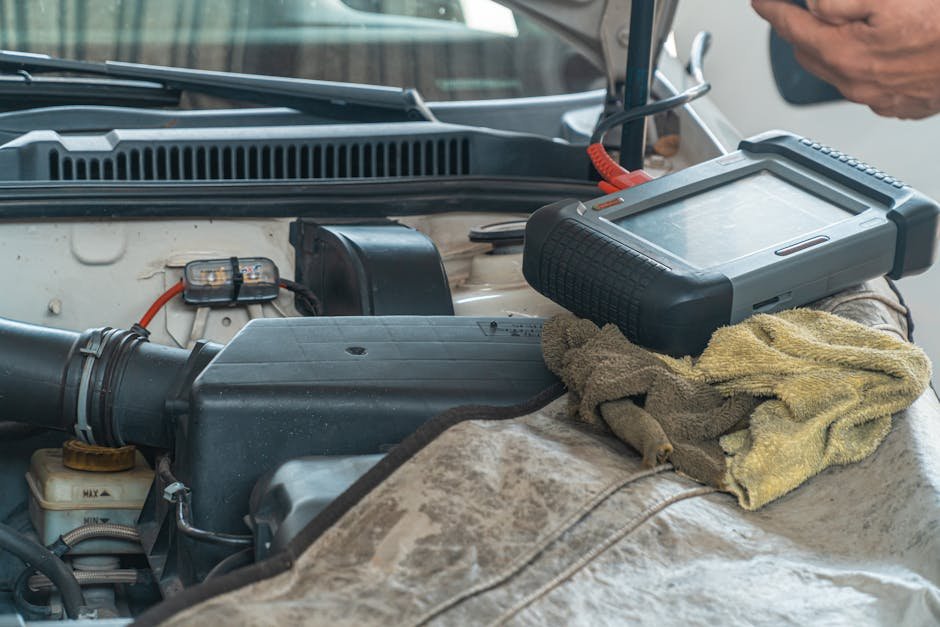
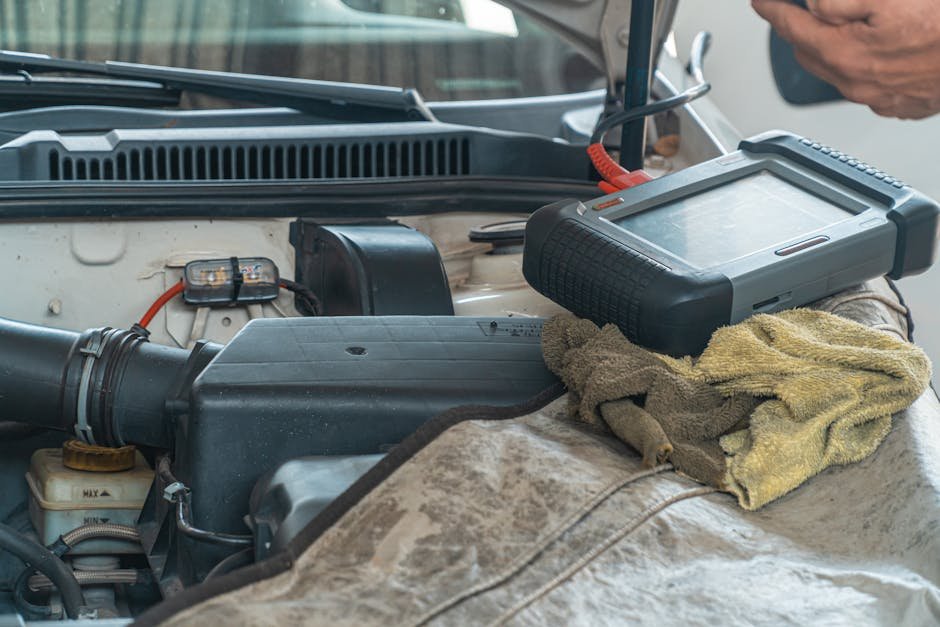
OBD-II trouble codes are the language your car uses to tell mechanics what’s wrong. Since 1996, every vehicle sold in the U.S. has used the same standardized system — which means knowing the most common codes gives you real power as a car owner. You’ll know when a repair is urgent, when a code is likely minor, and when a diagnosis sounds accurate. At Norm’s Auto Clinic in Coweta, Oklahoma, we believe an informed customer makes better decisions about their vehicle.
The 15 Most Common OBD-II Codes Explained
P0171 / P0174 — System Too Lean (Bank 1 / Bank 2)
One of the most common codes. The engine is running lean — too much air relative to fuel. Common causes include vacuum leaks (cracked hoses, intake manifold gaskets), a dirty or failing mass airflow (MAF) sensor, a clogged fuel filter, a weak fuel pump, or failing oxygen sensors. Left unaddressed, running lean can damage the catalytic converter and pistons. Repair cost typically ranges – depending on cause.
P0300 — Random/Multiple Cylinder Misfire
A misfire is occurring but not consistently in any one cylinder. Causes include bad spark plugs, worn ignition coils, clogged fuel injectors, low compression, or a vacuum leak. If the check engine light is flashing, drive immediately to a shop — a severe misfire can destroy your catalytic converter within minutes. Cost ranges –+ depending on root cause.
P0301–P0308 — Cylinder-Specific Misfire
Same as P0300 but identifies which cylinder is misfiring (P0301 = cylinder 1, P0302 = cylinder 2, etc.). This makes diagnosis easier. A swap test — moving the suspected coil to another cylinder to see if the misfire follows — is a standard first step.
P0420 / P0430 — Catalyst System Efficiency Below Threshold
One of the most common check engine light triggers, especially on higher-mileage vehicles. The catalytic converter’s efficiency has dropped below what the ECU expects. This is sometimes caused by a genuinely failing catalytic converter (–,500+) — but can also be caused by a faulty oxygen sensor reporting incorrect data, an exhaust leak affecting sensor readings, or a previous repair that used the wrong type of fuel. Proper diagnosis is essential before replacing the converter.
P0441 / P0455 / P0456 — EVAP System Leak
The evaporative emission control system has a leak — which often means a loose or faulty gas cap (P0456 — small leak), a cracked hose, or a failed purge valve or vent valve. Always tighten and inspect your gas cap first. If the code returns, further diagnosis is needed. Generally not a drive-safety issue, but it will cause emissions failure and fuel vapor waste.
P0128 — Coolant Temperature Below Thermostat Regulating Temperature
The engine is not reaching normal operating temperature — almost always caused by a failing thermostat stuck in the open position. A thermostat replacement is inexpensive (– typically) and should be done promptly, since running cold reduces fuel economy and causes accelerated engine wear.
P0340 / P0345 — Camshaft Position Sensor Circuit
The camshaft position sensor is malfunctioning. Symptoms include rough running, stalling, hard starting, or no start. The sensor itself is typically inexpensive (– parts), though labor varies significantly by vehicle. On some engines, the timing chain or belt tension affects this reading — a critical context a professional diagnosis provides.
P0401 — EGR (Exhaust Gas Recirculation) Flow Insufficient
The EGR system, which routes exhaust gas back into the intake to reduce combustion temperatures and NOx emissions, is flowing less than expected. Common on high-mileage vehicles — carbon buildup blocks EGR passages. Repair typically involves cleaning or replacing the EGR valve and passages.
P0507 — Idle Control System RPM High
Engine idle speed is higher than the ECU’s target. Usually caused by a vacuum leak, a sticking idle air control (IAC) valve, or a throttle body that needs cleaning. Symptoms include high idle at startup or when stopped in gear.
P0700 — Transmission Control System Malfunction
A general indicator that the transmission control module has stored a fault code. Always accompanied by a more specific transmission code stored in the TCM. This code alone doesn’t tell you what’s wrong — a scan of the TCM’s specific codes is required. Common causes range from low transmission fluid to solenoid failures to internal mechanical issues.

What to Do When a Code Sets
- Flashing check engine light: Stop driving as soon as it’s safe. Call Norm’s at (918) 279-8100.
- Solid check engine light + drivability symptoms: Get diagnosed within 1–2 days.
- Solid check engine light + no symptoms: Get diagnosed within a week. Don’t ignore it.
- Code cleared but returns: The underlying problem hasn’t been fixed. Diagnosis needed.
Norm’s Auto Clinic serves Coweta, Broken Arrow, Wagoner, Muskogee, and the greater Tulsa area. Bring your vehicle to 19 N. Broadway, Coweta, OK 74429 or call (918) 279-8100 for a professional diagnostic.