
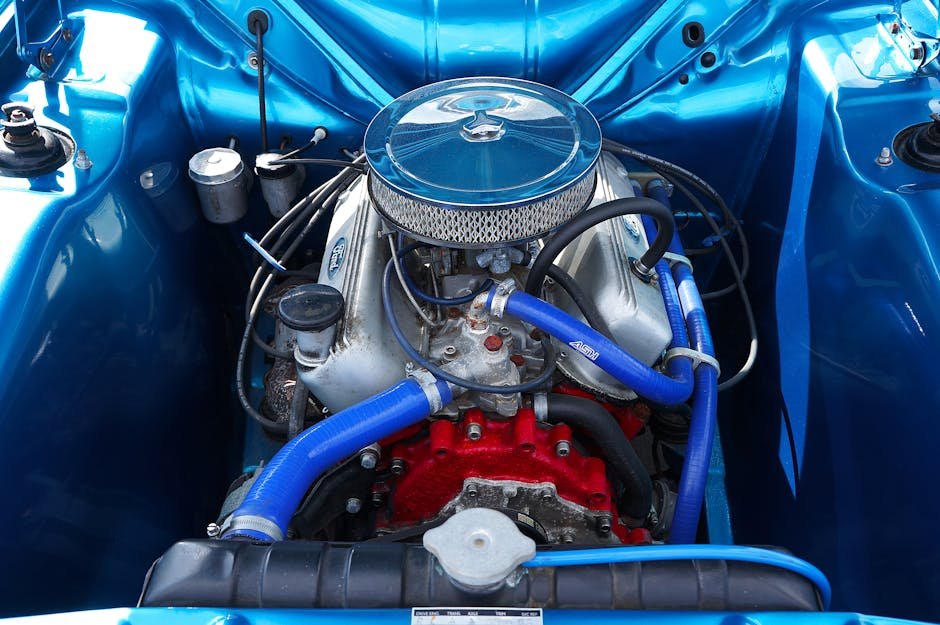
Pop the hood and look at your coolant reservoir, and you might see green, orange, red, blue, yellow, or pink fluid. Each color represents a different coolant formulation with different corrosion inhibitor chemistry — and mixing them incorrectly can cause rapid system corrosion. At Norm’s Auto Clinic in Coweta, Oklahoma, coolant type and condition is something we check at every service visit because getting it wrong has real consequences.
What the Different Coolant Colors Mean
Green — Conventional IAT Coolant
The original coolant color. Green coolant uses Inorganic Additive Technology (IAT) with silicate and phosphate-based corrosion inhibitors. It was the standard for domestic vehicles for decades and is still used in many older vehicles and some new ones. Service interval: every 2 years or 30,000 miles. Green coolant has shorter inhibitor life than modern formulations.
Orange — OAT Extended Life Coolant (Dex-Cool)
GM introduced orange Dex-Cool (Organic Acid Technology) in 1996 with a 5-year/150,000-mile service life. OAT coolant uses carboxylate corrosion inhibitors that last significantly longer than conventional silicates. Most post-1996 GM vehicles (Chevrolet, GMC, Buick, Cadillac) use orange OAT coolant. Do NOT mix orange OAT with green IAT — the inhibitor chemistries are incompatible and mixing degrades both.
Yellow/Gold — HOAT Coolant
Hybrid OAT (HOAT) combines organic acids with small amounts of silicates. Ford uses yellow Motorcraft Gold coolant; Chrysler/Ram/Jeep uses a HOAT formulation as well. Service interval: 5 years or 100,000 miles. HOAT is compatible with some OAT formulations but should not be mixed with conventional green IAT.
Blue — Many Asian Import Vehicles
Blue coolant is common in many Honda, Hyundai, Kia, and some Toyota applications. Honda’s Blue Type 2 and Hyundai’s blue coolant use specific inhibitor packages for their aluminum-heavy engine designs. Always use the manufacturer-specified fluid for these vehicles — generic substitutes may not provide adequate protection.
Pink/Red — Toyota, Lexus, Subaru, BMW
Toyota and Lexus use their own pink Super Long Life Coolant (SLLC) rated for 100,000 miles on first change. Subaru uses a similar pink formulation. BMW uses a blue-green coolant with specific BMW-approved chemistry. These manufacturer-specific fluids are genuinely different from generic aftermarket options and should be used when specified.
The Problem With Mixing Coolant Colors
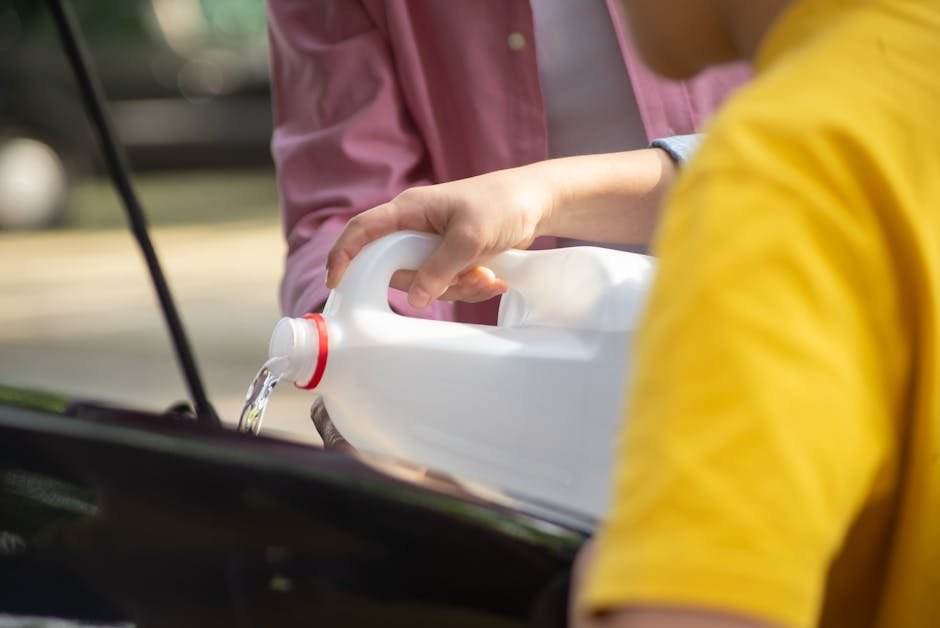
Mixing incompatible coolant types doesn’t just dilute the protection — it can create a gel-like substance that clogs passages, destroys inhibitor effectiveness in both fluids, and accelerates corrosion. If someone has topped off your coolant with the wrong type over time, the system may need a full flush and refill with the correct single specification.
The worst scenario we see: a vehicle that was originally filled with OAT orange has been topped repeatedly with conventional green IAT. The inhibitor packages have neutralized each other, and the resulting mixture offers minimal protection despite the reservoir being “full.”
What Color Should My Coolant Be?
Your owner’s manual specifies the correct coolant type for your vehicle. In general:
- Pre-1996 domestic vehicles: Green IAT
- 1996+ GM vehicles: Orange Dex-Cool or equivalent OAT
- Ford vehicles (post-2002 most models): Yellow Motorcraft Gold HOAT
- Chrysler/Dodge/Ram/Jeep: HOAT (purple or orange depending on year)
- Toyota/Lexus: Pink Super Long Life Coolant
- Honda/Acura: Blue Type 2 or manufacturer-specified equivalent
Coolant Inspection at Norm’s Auto Clinic
We check coolant type and condition at every visit — confirming not just the level but the color, clarity, and inhibitor strength. If you’re unsure what’s in your reservoir or suspect mixing has occurred, come see us at 19 N. Broadway, Coweta, OK 74429 or call (918) 279-8100. Serving Coweta, Broken Arrow, Wagoner, and the Tulsa area.