

If you drive a Nissan, Subaru, Honda, Toyota, or many other modern vehicles, there’s a good chance it has a CVT — a continuously variable transmission. CVTs have replaced traditional automatic transmissions in millions of vehicles because they improve fuel economy and provide smooth, seamless acceleration. But they also have unique maintenance needs and specific failure patterns that every CVT owner should know. At Norm’s Auto Clinic in Coweta, Oklahoma, we service CVT-equipped vehicles for drivers across Wagoner County, Broken Arrow, and the Tulsa metro.
What Is a CVT and How Does It Work?
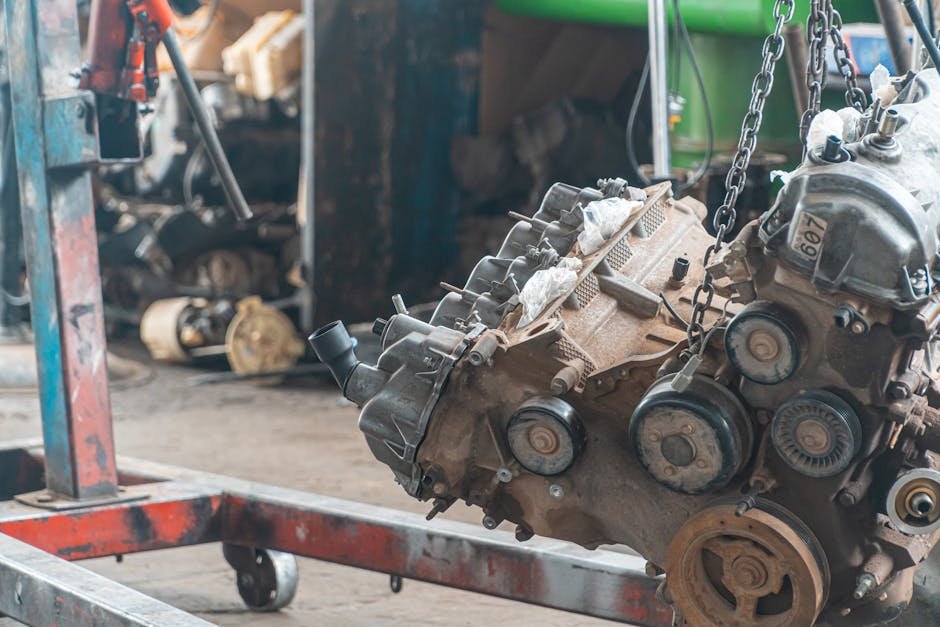
A conventional automatic transmission uses a set of fixed gear ratios — typically 6, 8, or 10 distinct gears. A CVT (Continuously Variable Transmission) uses two variable-diameter pulleys connected by a steel belt or chain. By varying the diameter of each pulley, a CVT can achieve an infinite number of effective gear ratios between its minimum and maximum — always finding the optimal ratio for current speed and load conditions.
The result is an engine that stays close to its most efficient RPM range across a wider range of driving conditions. This is why CVT-equipped vehicles often achieve better fuel economy ratings than comparable vehicles with traditional automatics. The trade-off is a different driving feel — CVTs tend to hold engine RPMs constant during acceleration rather than stepping through gears, which some drivers describe as “droning” under hard acceleration.
CVT Maintenance: What’s Different From a Regular Automatic
CVT Fluid Is Not Interchangeable
This is the most important thing to know about CVT maintenance: CVT fluid is specifically formulated for the steel belt/pulley system and is NOT interchangeable with conventional automatic transmission fluid (ATF). Using standard ATF in a CVT will destroy it. Every major manufacturer — Nissan (NS-3), Subaru (CVTF-II), Honda (HCF-2) — specifies their own CVT fluid formulation.
When your CVT needs fluid service, confirm that the correct OEM or OEM-equivalent specification is being used. At Norm’s, we verify the correct fluid spec for every CVT we service.
CVT Fluid Change Intervals
Many manufacturers advertise CVT fluid as “lifetime fill” — meaning no change is required. In practice, most independent transmission specialists and experienced mechanics disagree with this position. CVT fluid degrades from heat, oxidation, and the constant friction of the steel belt against the pulleys. In Oklahoma’s climate — with extreme summer heat and demanding stop-and-go driving around Tulsa — fluid degradation accelerates.
Our recommendation: change CVT fluid every 30,000–60,000 miles, or every 3–5 years. Vehicles used for towing, mountain driving, or frequent short trips should lean toward the shorter interval. This is one of the highest-value preventive services for any CVT vehicle.
Heat Is the CVT’s Biggest Enemy
CVTs generate significant heat under demanding conditions — towing, steep grades, aggressive acceleration. Most CVTs have a dedicated cooler that routes CVT fluid through the radiator or an external cooler. If this cooler fails or becomes restricted, CVT temperatures rise rapidly. Sustained high temperatures accelerate belt wear and can warp the pulleys themselves.
If you regularly tow a trailer or drive in hilly terrain around eastern Oklahoma, consider having an aftermarket CVT cooler added. The cost is relatively modest compared to CVT replacement.
Common CVT Problems and Symptoms
- Shuddering or vibration during acceleration: Often the first sign of belt wear or fluid degradation. Typically occurs between 25–45 mph when the CVT is working hardest.
- Hesitation or delayed response: CVT takes longer than expected to engage or respond to throttle input. Can indicate pulley wear or solenoid problems.
- Whining or humming noise: Bearing wear within the CVT assembly. May be louder under load.
- Overheating warning: CVT temperature light or message on the instrument cluster. Stop driving immediately and allow the transmission to cool.
- Jerking or sudden loss of power: CVT safety mode (limp mode) may engage to protect the transmission from further damage.
CVT Repair vs Replacement Costs
CVTs are more expensive to repair than traditional automatics because their internal components are more complex and parts availability is more limited. Typical cost ranges:
- CVT fluid change: $150–$300 — the best preventive investment
- Solenoid replacement: $300–$600
- CVT valve body: $400–$900
- CVT remanufactured unit: $2,000–$4,500 installed
- New OEM CVT: $4,000–$8,000+ installed
The case for preventive CVT fluid changes becomes clear when compared against replacement cost. A $200 fluid service at 40,000 miles can extend CVT life significantly — potentially by the life of the vehicle.
CVT Service at Norm’s Auto Clinic

Norm’s Auto Clinic services CVT-equipped vehicles from Nissan, Subaru, Honda, Toyota, Mitsubishi, Jeep, and other manufacturers. We source the correct OEM-specification CVT fluid for your vehicle and can diagnose CVT shudder, hesitation, and overheating issues with our scan tools.
Located at 19 N. Broadway, Coweta, OK 74429. Call us at (918) 279-8100. Serving Coweta, Wagoner, Broken Arrow, and the greater Tulsa area.