
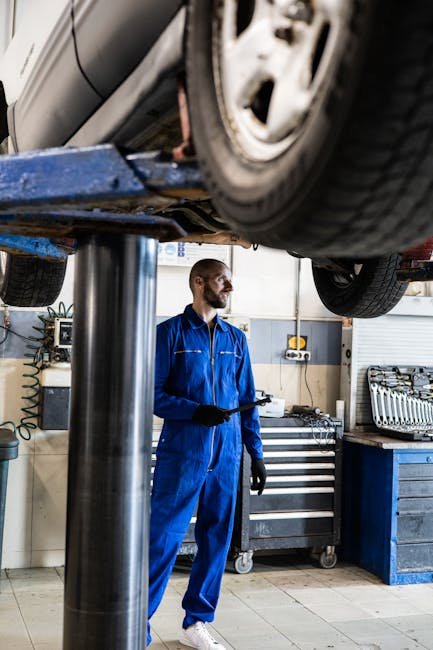
You just bought a used vehicle and the finance manager is offering you an extended warranty — also called a vehicle service contract — for an additional ,500 to ,500 added to your loan. Or maybe a third-party company mailed you an offer for extended warranty coverage. Should you buy it? For Oklahoma drivers, the answer depends on several factors this guide will walk you through honestly.

What an Extended Warranty Actually Is

An “extended warranty” is technically a vehicle service contract — a prepaid maintenance or repair agreement sold by the dealer, manufacturer, or a third-party administrator. It’s not a warranty in the legal sense; it’s a service contract. The distinction matters because service contracts are regulated differently than manufacturers’ warranties, and the coverage, exclusions, and claims processes vary enormously between providers.
The key documents to examine before buying any extended coverage are the contract terms: specifically, what’s covered, what’s excluded, the deductible per visit, whether you can use any licensed repair shop or only approved shops, and the claims process for authorization.
The Case For Buying Extended Coverage
Peace of mind and budget predictability: A major powertrain repair — transmission replacement (,500–,500), engine rebuild (,000–,000) — can be a financial shock. If you’re financing a vehicle and a major repair would strain your monthly budget severely, coverage that limits your out-of-pocket exposure has real value.
New vehicles from manufacturers (factory extended warranty): Manufacturer-backed extended warranties — like Toyota’s ToyotaCare+ or Honda’s Honda Care — are generally a reliable product. They use the same service network, have clear coverage terms, and are backed by the manufacturer’s financial stability. For new vehicles, manufacturer-extended coverage is the most legitimate extended warranty product available.
High-cost-to-repair vehicles: European luxury vehicles (BMW, Mercedes, Audi) have significantly higher parts and labor costs than domestic or Japanese vehicles. Extended coverage on a used BMW or Mercedes can pay for itself with a single major repair.
The Case Against Most Third-Party Extended Warranties
Exclusion lists that are longer than the coverage list: Most third-party service contracts are “exclusionary” contracts — they list specific covered components rather than covering everything. Reading the exclusion list often reveals that the most expensive failures (hybrid battery systems, electronic modules, turbochargers) are excluded. A contract that excludes what you actually fear breaking isn’t valuable.
Claims authorization friction: Many third-party warranty companies require pre-authorization for every repair. This means the shop must call and wait for approval before beginning work — sometimes for hours. Some companies deny claims for technicalities or require documentation that conflicts with standard shop practice.
Third-party administrator insolvency risk: Unlike manufacturer warranties, third-party vehicle service contract companies can and do go out of business. If the contract administrator fails, your coverage may be worthless. Check the financial backing and reputation of any third-party provider before purchasing.
The math often doesn’t work: Extended warranty pricing is designed to be profitable for the seller. The dealer’s finance department typically earns –,500 on a warranty sale. Actuarially, the average buyer pays more in premiums than they collect in repairs. You’re betting the vehicle will have costly repairs; the warranty company is betting it won’t.
A Better Alternative: The Repair Fund
Many financial advisors suggest an alternative to extended warranties: take the monthly payment equivalent you’d put toward warranty coverage and instead fund a dedicated vehicle repair savings account. Over three years of /month, you’d accumulate ,800 — enough to cover most common repairs without the contract friction, exclusions, or third-party insolvency risk. If you don’t use it, you keep the money.
What to Ask Before Buying Any Extended Coverage

- Is this a “listed component” (exclusionary) or “bumper to bumper” (inclusionary) contract?
- What is the per-visit deductible?
- Can I use any licensed repair shop, or only specific shops?
- What is the claims authorization process?
- Who backs the contract financially — the dealer, a third-party administrator, or the manufacturer?
- What are the most common exclusions in this specific contract?
At Norm’s Auto Clinic in Coweta, we work with most major extended warranty providers and can help you navigate the pre-authorization process. Questions about your specific coverage? Call us at (918) 279-8100 — we’ll tell you honestly what your contract is likely to cover for any repair you need.