

Honda’s Civic and Accord have been two of America’s best-selling cars for decades — and northeastern Oklahoma buyers have embraced them for their reliability, efficiency, and value. But Honda’s reputation has some nuance: the 1.5T turbocharged engine family introduced in 2016–2017 brought well-documented issues that every current-generation Civic and Accord owner should understand.
At Norm’s Auto Clinic, we service a growing number of newer-generation Civics and Accords alongside the older naturally aspirated models that built Honda’s reliability reputation. Here’s what to watch for.
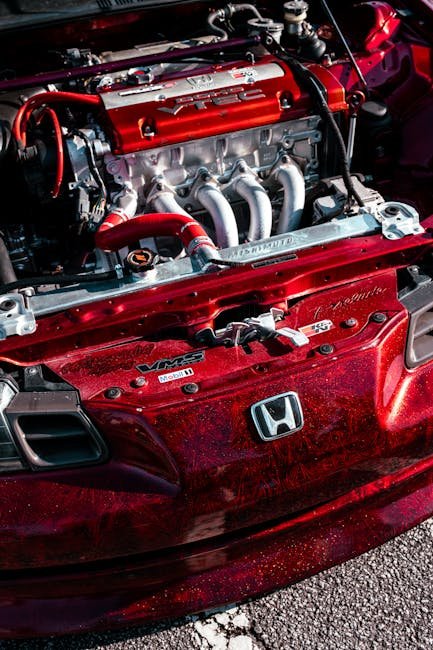
The Honda 1.5T Oil Dilution Problem
The most significant known issue with 2016–2021 Honda Civic 1.5T and Accord 1.5T engines is oil dilution — gasoline mixing into engine oil during cold short trips. Direct injection engines inject extra fuel during cold starts to enrich the mixture, and some of that fuel washes past cylinder walls into the crankcase. In cold climates, this is severe. In Oklahoma’s climate, it’s a moderate concern — our long, hot summers mean the engine reaches operating temperature quickly on most trips.
If you primarily drive short trips in cooler months, change your oil every 3,000–4,000 miles rather than Honda’s suggested 7,500-mile interval. Consider 5W-30 full synthetic rather than the factory 0W-20, which is thinner and more susceptible to dilution effects. The 2.0L naturally aspirated Civic and the Accord 2.0T don’t share this issue.
Honda extended the powertrain warranty coverage for oil dilution on many affected vehicles. If your Civic or Accord has this issue, document the oil condition carefully — it may be a covered warranty repair.

Honda CVT Judder and 10-Speed Transmission Shudder
The CVT in the 2013–2015 Accord (certain configurations) and some Civics has a documented judder and shudder. Honda issued extended warranty coverage and the fix typically involves a transmission fluid replacement with Honda’s specific HCF-2 fluid. Never use generic CVT fluid in a Honda — the wrong fluid causes immediate shudder and long-term damage.
The 10-speed automatic in the 2018+ Accord has had shudder complaints, particularly on cold mornings. Honda addressed many with software calibration updates. If your Accord shudders at light throttle during warmup, have it diagnosed promptly — the calibration update window doesn’t stay open forever.
Civic and Accord Brake, Suspension, and Electrical Issues
Honda Civics from 2016–2021 tend to go through rear brake pads faster than average — the electric parking brake system on some trims drags slightly, accelerating wear. Budget for rear brake replacement around 40,000–60,000 miles. Using Honda-compatible replacement pads matters here; some aftermarket pads don’t interface correctly with the EPB system.
The 10th-gen Civic has a documented rear suspension clunking noise on rough roads, caused by bushing wear. Honda issued TSBs for this — the fix involves updated bushing material and properly torqued rear suspension bolts. We also commonly see TPMS sensor failures, infotainment freezing, and lane-keep camera miscalibration on newer Civics.

Honda Service at Norm’s Auto Clinic
Our technicians service Honda Civics and Accords regularly and stay current on TSBs, extended warranties, and specific service requirements for each generation. We use Honda-approved fluids and OEM-equivalent parts.
Honda owners throughout Coweta, Broken Arrow, Wagoner, and the Tulsa metro trust Norm’s for quality service at fair prices. Call (918) 279-8100 or visit 11150 S 265th E Ave, Coweta, OK 74429 — Monday–Friday, 8am–5pm.