
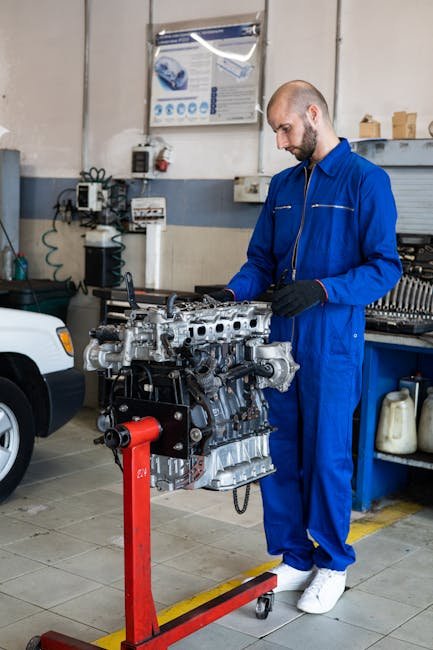
A common question we hear at Norm’s Auto Clinic in Coweta, Oklahoma: “How long will my transmission last?” It’s a fair question — transmission replacement is one of the most expensive repairs a vehicle can need, and knowing what to expect helps you plan and maintain accordingly. The answer depends heavily on how well the transmission is maintained, the type of transmission, and how the vehicle is driven.
Average Transmission Lifespan

As a general benchmark, a well-maintained automatic transmission should last 150,000–200,000 miles or more. Manual transmissions tend to last longer — 200,000+ miles — because they have fewer hydraulic components and rely more on mechanical simplicity. CVT transmissions have the shortest typical lifespan, often 120,000–180,000 miles, and are more sensitive to maintenance neglect and heat.
These are medians, not guarantees. We’ve seen transmissions fail at 60,000 miles due to neglect, and we’ve seen original transmissions running smoothly at 280,000 miles on a properly maintained vehicle. The spread is significant — and maintenance is the biggest variable within your control.

Factors That Determine How Long Your Transmission Lasts
Fluid Maintenance — The Single Biggest Factor
Transmission fluid lubricates, cools, and provides the hydraulic pressure that engages gears. As fluid ages, its friction characteristics change, its additives deplete, and it accumulates metal particles from normal wear. Degraded fluid accelerates internal wear exponentially — hot, dirty fluid destroys clutch packs and seals that fresh fluid would protect for decades.
Vehicles that have their transmission fluid changed on schedule — every 30,000–60,000 miles for most automatics — dramatically outlast those that don’t. A transmission that has never had its fluid changed is working harder, running hotter, and wearing faster with every mile.
Operating Temperature
Heat is the enemy of every transmission component. Every 20 degrees Fahrenheit above normal operating temperature cuts fluid life roughly in half. Conditions that spike transmission temperatures include: towing heavy loads, stop-and-go city driving in summer heat, driving in hilly or mountainous terrain, and aggressive acceleration habits.
Oklahoma’s summers are punishing on transmissions. Driving in Tulsa traffic in July with the AC blasting, the engine working hard, can put a transmission under thermal stress that accelerates wear significantly compared to the same vehicle driven in a temperate climate. This is one reason we recommend slightly more aggressive fluid service intervals for Oklahoma drivers than national recommendations suggest.
Towing and Load
Towing a trailer, hauling heavy loads, or driving a truck used for work all shorten transmission life relative to unloaded passenger car use. If you regularly tow near your vehicle’s rated capacity, consider an auxiliary transmission cooler and more frequent fluid changes. The transmission cooler alone can meaningfully extend lifespan by keeping operating temperatures in a safer range.
Vehicle Make and Model
Some transmission designs are more robust than others. Toyota’s A340 and A750 series automatics have legendary longevity records. Honda’s older 4-speed automatics have a weaker reliability reputation. Ford’s 6R80 used in F-150s is generally well-regarded. GM’s 6L80 has had some documented issues. Nissan’s CVTs have a shorter average lifespan than most conventional automatics.
Knowing the reputation of your specific transmission can help you calibrate your maintenance intensity and set realistic expectations.
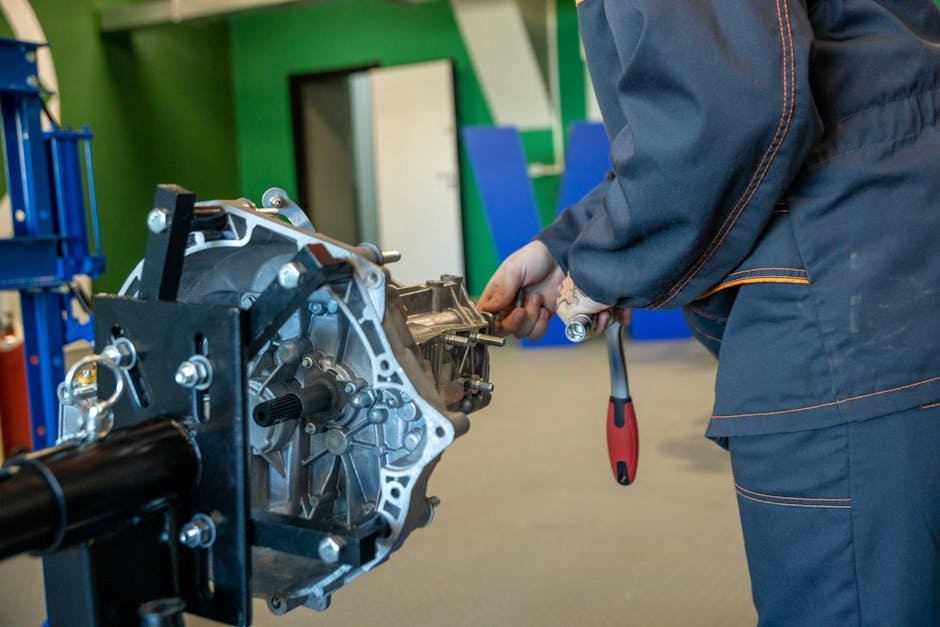
Signs Your Transmission May Be Reaching the End
- Slipping — RPMs rising without acceleration
- Shuddering or vibration during shifts or at highway speed
- Delayed or harsh engagement when moving from Park to Drive
- Burnt smell from transmission fluid
- Fluid that is dark brown or black (should be translucent red or pink)
- Transmission warning light or OBD-II codes P07xx or P08xx range
Repair vs Replace — When to Make Which Call
When a transmission starts failing, the decision between repair and replacement depends on: the vehicle’s overall condition and value, the specific failure mode (some are repairable cheaply, others require full rebuild), and your budget. A vehicle worth $8,000 with a $3,500 transmission problem may make financial sense to repair if the rest of the vehicle is solid. The same repair on a vehicle worth $3,000 often doesn’t.
At Norm’s Auto Clinic, we give you an honest assessment before recommending anything. If a repair makes financial sense, we’ll tell you. If it doesn’t, we’ll tell you that too. Call us at (918) 279-8100 or visit us at 19 N. Broadway, Coweta, OK 74429.