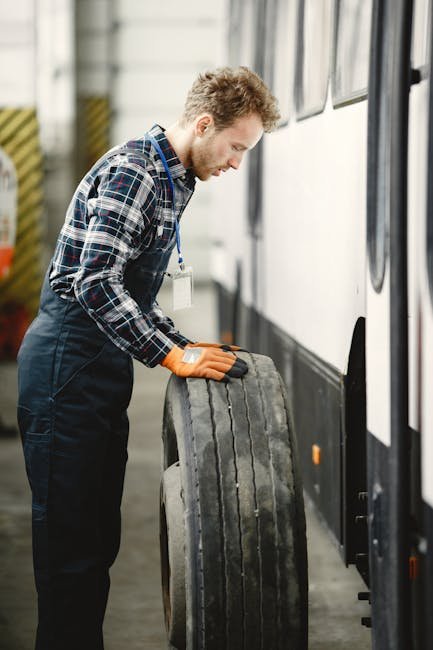
Tire pressure is one of those vehicle basics that most drivers know they should check — and most don’t do often enough. Properly inflated tires last longer, improve fuel economy by 0.5–3%, provide better handling, and are less likely to fail catastrophically. In Oklahoma’s extreme temperature swings — from 105-degree summer afternoons to 15-degree winter nights — tire pressure changes dramatically and requires regular monitoring.
Here’s the complete guide to checking tire pressure correctly, including why Oklahoma’s climate makes this especially important.
What You Need and When to Check
You need a tire pressure gauge — either a digital model (–) or a quality analog dial gauge (–). Avoid pencil-style gauges; they’re inaccurate and give false confidence. Keep a gauge in your glove compartment.
Always check tire pressure in the morning before driving, when tires are ‘cold’ — within 3 hours of the last drive and not having traveled more than a mile. Driving heats the air inside tires, raising pressure 4–6 PSI above the cold reading. Checking a hot tire gives a false high reading. In Oklahoma summers, tires that sat in a sunny parking lot all day are also ‘hot’ even if you haven’t driven — wait 30 minutes in shade before checking.
The correct pressure for your vehicle is listed on a sticker inside the driver’s door jamb — not on the tire sidewall (that number is the maximum pressure the tire can hold, not the recommended operating pressure). Most modern cars use 32–35 PSI front and rear.
Oklahoma Temperature and Tire Pressure
Tire pressure changes approximately 1 PSI for every 10 degrees Fahrenheit of temperature change. Oklahoma’s seasons create dramatic swings: if you set your tires to the correct pressure on a 75-degree spring day, they’ll be about 3 PSI low when a January morning drops to 5 degrees. Check and adjust pressure when seasons change, and briefly check monthly in summer.
TPMS (Tire Pressure Monitoring System) warnings appear when pressure drops 25% below the recommended level — so a 32 PSI tire has to drop to about 24 PSI before the light comes on. By then, fuel economy is measurably worse and handling is compromised. Don’t rely solely on the TPMS light.
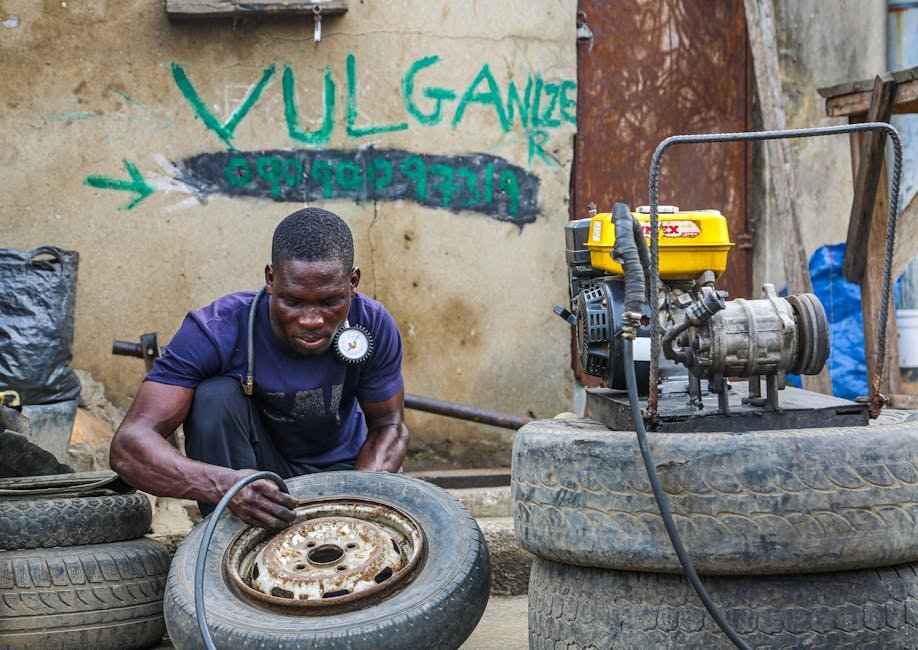
Tire Service at Norm’s Auto Clinic
We check and adjust tire pressure on every vehicle that comes through our shop for any service. If your TPMS light is on, we’ll find which tire is low, check for leaks or valve stem issues, and get you back to proper pressure.
Call (918) 279-8100 or stop by 11150 S 265th E Ave, Coweta, OK 74429 — Monday–Friday, 8am–5pm.