
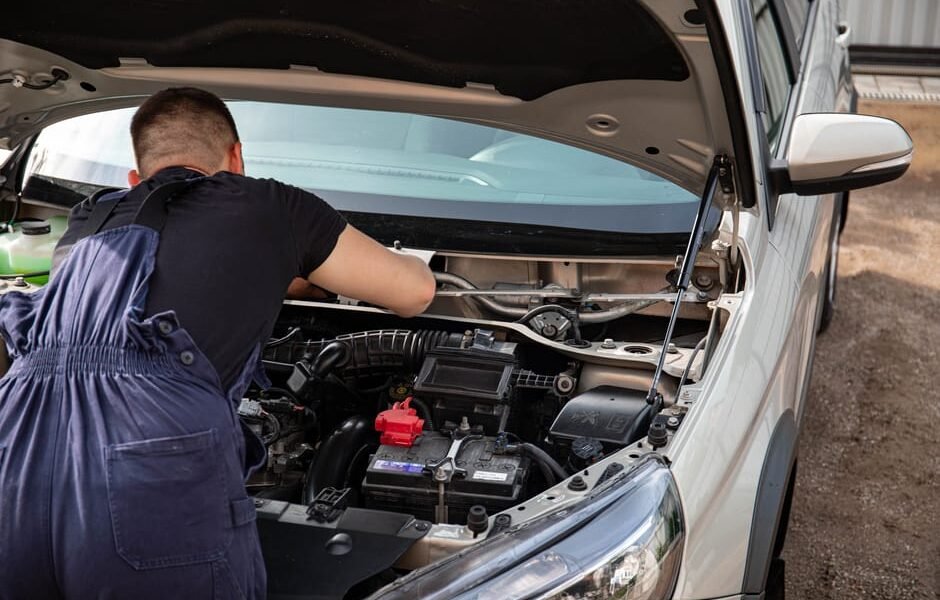
The Hyundai Tucson and Santa Fe have become two of the most popular SUVs in northeastern Oklahoma — and it’s easy to see why. They offer a comfortable ride, modern features, good fuel economy, and a lower purchase price than competing Japanese and American brands. But popularity means we service a lot of them at Norm’s Auto Clinic, and we’ve learned exactly where these vehicles are most likely to need attention.
This guide covers the essential maintenance intervals for Hyundai Tucson and Santa Fe owners, the most common repairs we see at higher mileages, and what you can do to protect your investment in Oklahoma’s demanding driving conditions.
Hyundai Tucson & Santa Fe Maintenance Schedule
Both the Tucson and Santa Fe use a fairly standard Korean-car maintenance schedule, but Oklahoma’s heat and road conditions mean we recommend the more conservative intervals over the extended ones. For the Tucson (2016+) and Santa Fe (2013+) with naturally aspirated engines, oil changes every 5,000–6,000 miles with full synthetic is our recommendation — not the 7,500–10,000 miles some dealers quote.
Turbocharged Tucson models (2022+ with the 1.6T engine) benefit even more from strict oil change intervals. Turbochargers run extremely hot and require clean oil for lubrication — skipping or stretching oil changes dramatically shortens turbocharger life. We’ve seen turbo failures on Tucsons with less than 80,000 miles where the oil change history was inconsistent.
Other key maintenance items: coolant flush every 60,000 miles, brake fluid change every 2–3 years, spark plugs at 60,000–90,000 miles depending on engine, and transmission fluid service at 40,000–60,000 miles. The air filter should be inspected annually — Oklahoma’s dusty conditions mean it often needs replacement more frequently than the factory schedule suggests.
Theta II Engine Issues in the Santa Fe
Santa Fe models powered by the 2.0T or 2.4L Theta II engines (approximately 2013–2018) share the same engine family issue as the Hyundai Sonata — a manufacturing defect that can lead to engine bearing failure, knocking sounds, and eventual engine seizure. Hyundai issued an extended warranty covering these engines up to 10 years / 200,000 miles for many affected vehicles.
If you own a 2013–2018 Santa Fe Sport with the 2.0T or 2.4L engine, check your VIN at the NHTSA recall database before your next service visit. Even if your vehicle isn’t covered, staying on top of oil changes with quality full synthetic oil is the single best protection against the oil starvation that accelerates this failure mode.
The newer 2.5L Smartstream engines in the 2019+ Santa Fe and 2022+ Tucson are significantly improved and don’t carry the same level of risk — but they still reward careful maintenance.
AWD System and Transmission Service
Many Oklahoma drivers choose AWD versions of the Tucson or Santa Fe for extra traction during winter weather. Hyundai’s HTRAC AWD system is generally reliable, but the rear differential and transfer case fluid are often overlooked in standard maintenance schedules. We recommend servicing these fluids every 30,000–40,000 miles, especially if you do any towing or occasionally drive on dirt or gravel roads.
The 8-speed automatic transmission in the Santa Fe is smooth and generally durable, but transmission fluid degradation at high mileage can cause rough shifting, delayed engagement, and eventually transmission damage. If your Santa Fe has over 80,000 miles and has never had a transmission fluid service, schedule one soon — it’s a relatively inexpensive service that can add significant life to the transmission.
The 7-speed dual-clutch transmission (7DCT) found in some Tucson models shares the hesitation and shudder issues seen on the Elantra. If your Tucson hesitates when pulling away from a stop, have it diagnosed — in many cases a software update from the dealer resolves the issue, but mechanical issues may also be present at higher mileages.
Suspension, Steering, and Brake Wear
Hyundai Tucson and Santa Fe models tend to go through front struts, sway bar links, and control arm bushings at average to slightly faster-than-average rates — especially on Oklahoma’s rougher rural highways and gravel roads. Budget for strut replacement around 80,000–100,000 miles and inspect the front suspension components annually for wear.
Brake rotors on both the Tucson and Santa Fe tend to warp relatively easily, especially with aggressive driving or frequent towing. If you feel a pulsation or shudder when braking from highway speeds, have your rotors measured — replacement is often needed even if the pads still have life remaining. Using higher-quality replacement rotors can significantly reduce the frequency of this problem.
Both models have electrically assisted power steering, which is reliable but can develop a noise or stiff feeling at high mileage. The fix often involves replacing the steering column intermediate shaft — a relatively straightforward repair.
Bring Your Hyundai SUV to Norm’s Auto Clinic
Norm’s Auto Clinic has been servicing import vehicles including Hyundai SUVs for over 30 years. We understand the specific maintenance needs of these vehicles and use quality OEM-equivalent parts with honest pricing — typically 20–40% less than dealership rates for the same quality work.
We serve Hyundai Tucson and Santa Fe owners throughout Coweta, Broken Arrow, Wagoner, Muskogee, and the Tulsa metro area. Call (918) 279-8100 or visit us at 11150 S 265th E Ave, Coweta, OK 74429, Monday–Friday 8am–5pm.