
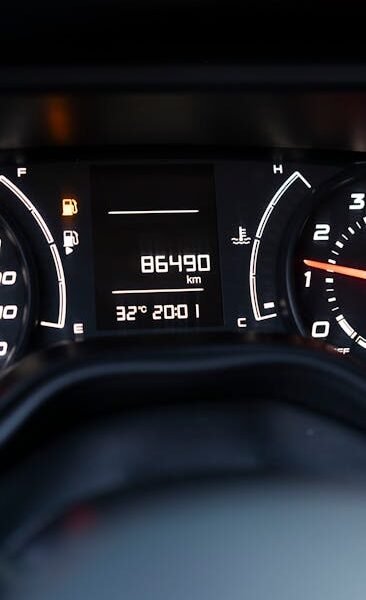
Why So Many Drivers Ignore It
According to industry surveys, nearly 20% of drivers have had a check engine light on for more than three months before seeking service. The reasons are understandable: the car seems to be driving fine, previous check engine lights turned out to be trivial (loose gas cap, bad sensor), or the anticipated repair cost is a deterrent.
The problem is that the check engine light is triggered by your vehicle’s computer network — and it doesn’t distinguish between a fix and a ,000 repair in progress. Both illuminate the same amber light. What you can’t see is whether the underlying issue is damaging other components while you drive.
At Norm’s Auto Clinic in Coweta, Oklahoma, we regularly see vehicles where ignoring an early warning light led to significantly more expensive repairs. Here’s what actually happens inside your engine when that light stays on.
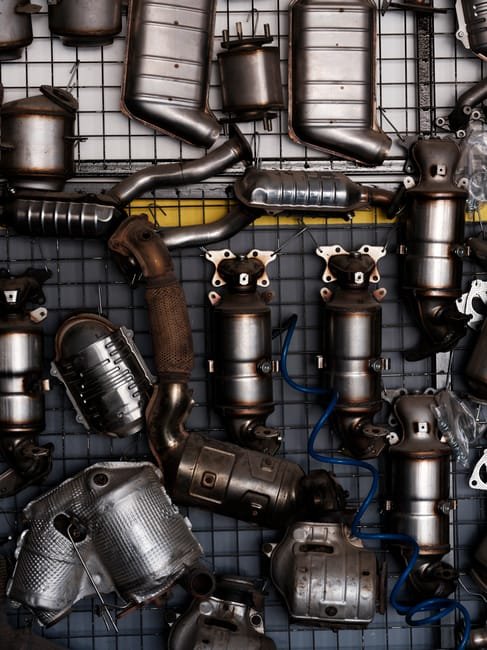
A Loose Gas Cap: The Best Case Scenario
Some check engine lights really are trivial. An evaporative emission leak (codes P0440–P0446) is often caused by nothing more than a loose or cracked gas cap. Tighten or replace the gas cap, clear the code, and the light stays off.
This is why many people learn to dismiss the check engine light — their experience has been that it always turns out to be minor. But that’s survivorship bias. The minor issues get noticed and fixed. The serious ones quietly escalate.
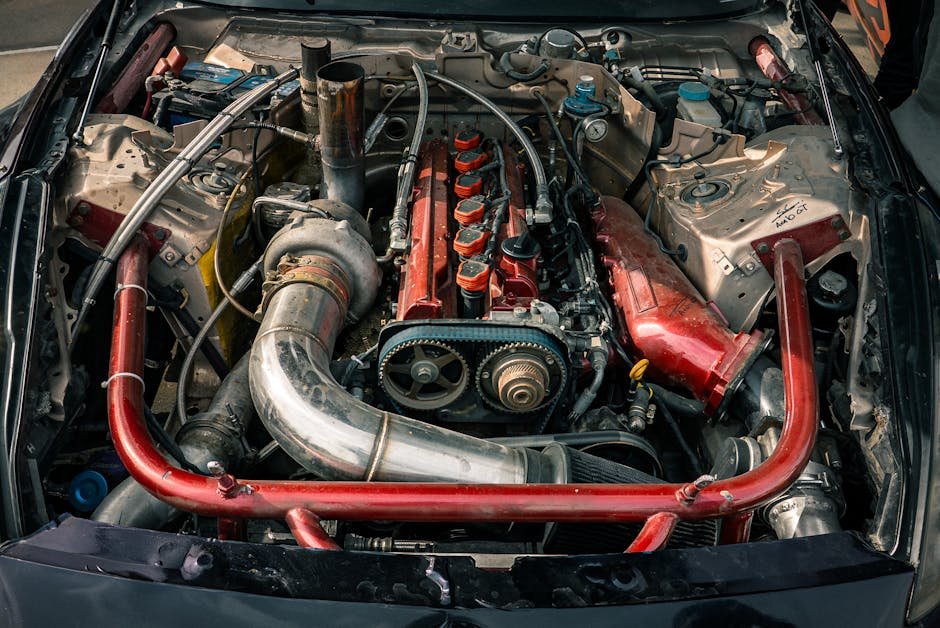
Misfires: How Ignoring Them Destroys the Catalytic Converter
A flashing check engine light almost always indicates an active engine misfire. Misfires occur when a cylinder fails to ignite its fuel-air charge — due to a worn spark plug, bad ignition coil, fuel injector issue, or compression loss.
When a misfire occurs, unburned fuel passes through the exhaust system into the catalytic converter. The converter tries to combust this fuel internally, causing its internal temperature to spike from the normal 900°F to potentially 2,000°F+. At those temperatures, the precious metal catalyst substrate melts and fuses into a solid ceramic mass.
The result: a destroyed catalytic converter that costs –,500+ to replace. What started as a spark plug or ignition coil became a ,500 repair — all because the flashing light was ignored for a few weeks.

Oxygen Sensor Failure: Fuel Economy and Engine Damage
Oxygen sensors monitor the exhaust to help the ECU maintain the correct air-fuel mixture. A failing O2 sensor doesn’t directly damage the engine — but the ECU’s incorrect response to bad sensor data does.
With a failing upstream oxygen sensor, the engine may run rich (too much fuel) or lean (too little fuel) depending on how the sensor is failing. A rich-running engine damages the catalytic converter and can foul spark plugs. A lean-running engine runs hotter and can cause piston damage or pre-ignition in extreme cases.
Fuel economy typically drops 10–25% with a faulty O2 sensor. Over 10,000 miles, that’s – in extra fuel costs — easily more than the sensor replacement itself.
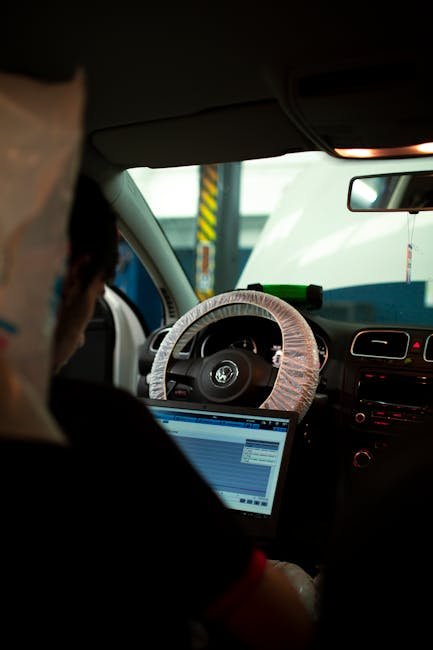 diagnostic scan to assess check engine light cause” class=”wp-image-2783″ srcset=”https://www.normsautoclinic.com/wp-content/uploads/2026/05/ignoring-check-engine-light-consequences-img4.jpg 433w, https://www.normsautoclinic.com/wp-content/uploads/2026/05/ignoring-check-engine-light-consequences-img4-200×300.jpg 200w” sizes=”auto, (max-width: 433px) 100vw, 433px” />
EGR Valve and Carbon Buildup
EGR (Exhaust Gas Recirculation) system codes are commonly ignored because the car often drives fine with a partially stuck EGR valve. But a failed EGR system increases combustion temperatures, producing more nitrogen oxide emissions and accelerating carbon buildup on intake valves.
Carbon deposits on intake valves are a particular problem on direct-injection engines (many modern gasoline engines). Once carbon accumulates significantly, the symptoms become hard misfires, rough idle, and reduced power. Cleaning requires disassembling the intake manifold — a labor-intensive procedure costing –,200+ depending on the engine.
Transmission and Drivetrain Codes
Some check engine lights involve transmission fault codes, particularly in vehicles with electronically controlled automatic transmissions. A transmission solenoid code ignored for months can allow the transmission to continue operating in a degraded mode that accelerates wear on clutch packs and bands.
What might have been a solenoid replacement becomes a ,500+ transmission rebuild because the underlying electrical fault allowed the transmission to slip and overheat for thousands of miles.
The Real Cost of Waiting
Let’s put numbers to the decision to ignore the check engine light.
- Loose gas cap → – if addressed immediately. Same cost if ignored (no escalation).
- Failing oxygen sensor → – if addressed promptly. – if ignoring causes catalytic converter inefficiency.
- Misfiring spark plug → – per cylinder if addressed. –,500 if catalytic converter is destroyed.
- EGR failure → – if addressed promptly. –,200 if carbon buildup requires intake cleaning.
- Transmission solenoid → – if addressed early. ,500–,000 for transmission rebuild if ignored.
What to Do When the Light Comes On
First: check if the gas cap is tight. This solves roughly 10–15% of check engine lights. Second: check if the light is solid or flashing. A flashing light means reduce speed and get to a shop immediately. A solid light means schedule service within a few days.
Don’t make the mistake of assuming a light that’s been on for weeks without apparent symptoms means the problem is minor. Some of the most expensive repairs we see at Norm’s Auto Clinic are cases where a small issue quietly escalated for months.
We offer professional check engine light diagnostics at Norm’s Auto Clinic in Coweta. We’ll pull the codes, test the implicated components, and give you an honest assessment of urgency and repair cost. Call (918) 279-8100 or stop by 19 N. Broadway, Coweta, OK 74429.