
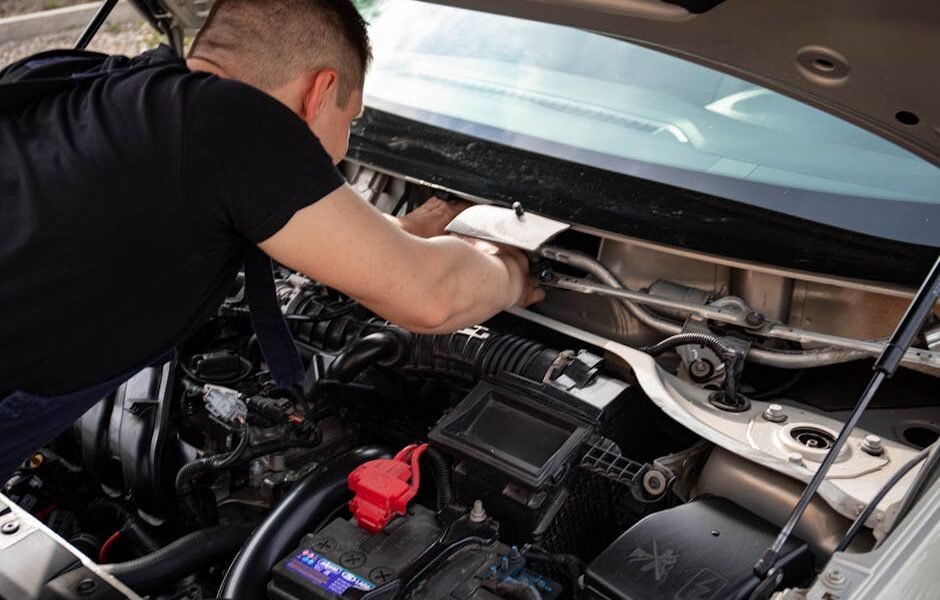
The Nissan Altima is one of the best-selling sedans in America, and a very common vehicle in northeastern Oklahoma. It offers competitive pricing, decent fuel economy, and comfortable features — but it has some well-documented reliability issues that every Altima owner should understand. At Norm’s Auto Clinic, we service more Nissan Altimas than almost any other vehicle, and we’ve seen firsthand what goes wrong.
This guide covers the most common Nissan Altima problems, which model years are most affected, warning signs to watch for, and what you can do to protect your investment.
CVT Transmission Failure: The Altima’s Biggest Weakness
The continuously variable transmission (CVT) is the single most common major repair issue on Nissan Altimas from 2013 onward, and it’s the most expensive. CVT failures typically present as shuddering or jerking during acceleration, a whining or rattling noise, hesitation when pulling away from a stop, or a sudden loss of forward motion while driving.
The root causes include overheating (CVTs run hotter than conventional transmissions and are more sensitive to fluid degradation), fluid contamination, and internal wear on the belt and pulleys. Nissan extended the CVT warranty on many affected models to 84 months / 84,000 miles under pressure from class-action lawsuits — check your VIN at the NHTSA recall database to see if your vehicle qualifies for extended coverage.
The single most important preventive measure is a CVT fluid change every 30,000–40,000 miles. Nissan markets the CVT fluid as ‘lifetime fill’ — this is misleading. The fluid degrades from heat cycling, and replacing it regularly is essential to CVT longevity. Many CVT failures we see are on vehicles where the fluid was never changed. A CVT fluid service can delay or prevent a ,500–,500 CVT replacement.
Timing Chain Stretch and Failure on the QR25DE Engine
The 2.5L QR25DE engine in the Altima (2002–2012) has a known timing chain stretch problem that typically manifests around 70,000–120,000 miles. Symptoms include a rattling noise on cold startup that goes away after a minute of running, rough idle, and a P0011 or P0021 camshaft position timing error code.
A stretched timing chain can slip or jump a tooth, causing the engine to run rough, stall, or in severe cases, bend valves — resulting in major engine damage. If you have an older Altima with more than 80,000 miles and hear that cold-start rattle, don’t ignore it. A timing chain service runs –,200 at our shop — far less than the ,000–,000 cost of an engine rebuild.
The 2.5L engine in 2013+ Altimas also has oil consumption issues on some vehicles — consuming up to a quart every 1,000–2,000 miles. Nissan ran a consumer assistance program for some affected vehicles. If your newer Altima is consuming oil at this rate, check your dipstick regularly, document the consumption, and contact Nissan.
Power Steering Failure and Steering Rack Issues
Many 2013–2018 Altimas equipped with electric power steering experience a sudden, complete loss of power steering assist — turning the wheel becomes heavy and difficult, especially at low speeds. This is often caused by a failure of the power steering control module or the torque sensor in the steering column. Nissan issued a recall covering some affected vehicles.
At higher mileages, the steering rack itself can develop internal leaks (on older hydraulic systems) or play and looseness (on electric systems). If you notice your Altima drifting to one side, experiencing a vague or loose steering feel, or you hear a clunking sound on turns, schedule a steering inspection.
Altima front wheel bearings also tend to fail between 80,000–120,000 miles, presenting as a grinding or humming noise that changes pitch on turns. The passenger-side front bearing is particularly common. This is a straightforward repair — about – per wheel — but ignoring it can lead to wheel separation in extreme cases.
Protecting Your Altima: The Maintenance Strategy That Works
Given the CVT’s sensitivity, the most important things Altima owners can do are: change the CVT fluid every 30,000–40,000 miles, use Nissan-specification CVT fluid (NS-3 or equivalent — don’t use generic CVT fluid), and avoid aggressive driving that overheats the transmission, especially in stop-and-go traffic.
Keep up with oil changes every 5,000 miles with full synthetic — oil consumption on these engines means you should check your dipstick regularly. Monitor the coolant level (the 2.5L runs warm in Oklahoma summers) and have the cooling system inspected if you see the temperature gauge running higher than normal.
Norm’s Auto Clinic handles all Nissan Altima maintenance and repairs. We’re familiar with every common Altima issue and can diagnose problems accurately without the guesswork. Call us at (918) 279-8100 or visit our shop in Coweta, Oklahoma — Monday through Friday, 8am–5pm.