
You parked your car last night with a perfectly good battery. This morning, it won’t start. You jump it, drive around for a while, and it starts fine for the next few days — until one morning it’s dead again. This cycle is a classic symptom of parasitic battery drain: a circuit in your vehicle that keeps drawing current from the battery even after you’ve turned everything off. At Norm’s Auto Clinic in Coweta, Oklahoma, parasitic drain diagnosis is one of our most requested electrical services. Here’s a complete guide to understanding and fixing it.
What Is Parasitic Battery Drain?
Every modern vehicle has systems that draw a small, intentional amount of current from the battery when the car is off. The alarm system watches for intrusion. The key fob receiver listens for your remote. The clock keeps time. Various onboard computers maintain their memory. Together, these systems draw a normal parasitic load of approximately 20–50 milliamps (mA). At this level, a healthy battery can sit for 3–4 weeks without going dead.
A parasitic drain problem occurs when one or more circuits draw significantly more than this normal amount — often 200–500 mA or more. At 200 mA, a healthy 60 amp-hour battery will be completely discharged in about 12 days. At 500 mA, that same battery dies in 5 days. High enough draw rates can kill a battery overnight.
Common Sources of Excessive Parasitic Drain
Malfunctioning Body Control Module
The body control module (BCM) manages interior lights, door locks, power windows, and communication between various electronic systems. If the BCM fails to enter its sleep state after the car is parked, it can draw 100–400 mA continuously — more than enough to kill a battery overnight. BCM parasitic drain issues often also cause other symptoms like interior lights that stay on or door locks that cycle on their own.
Stuck Relay
Relays are electrically-controlled switches that power high-current components. When a relay fails in the closed (on) position, it keeps its downstream circuit powered continuously. A stuck fuel pump relay can power the fuel pump 24/7. A stuck cooling fan relay keeps the radiator fan running after the engine shuts off. Any relay stuck on will drain the battery within hours to days depending on the circuit’s current draw.
Interior Light Remaining On
A dome light, trunk light, glove box light, or underhood light that stays on drains the battery at 5–15 watts (about 400–1,200 mA at 12V) — fast enough to kill a battery overnight. Door switches that stick open, trunk latches that don’t fully close, and glove boxes that won’t shut are common causes. This is one of the simplest causes of battery drain but is often overlooked because the light may be in a location you don’t check (trunk, glove box) or only visible when the door is ajar.
Aftermarket Accessories Wired Incorrectly
Aftermarket accessories that draw constant power when the car is off are a very common cause of parasitic drain. Audio amplifiers, subwoofers, GPS tracking devices, dashcams, alarm system upgrades, remote start systems, and LED lighting kits should all be wired to switched power (circuits that turn off with the ignition) rather than constant power. When they’re wired to constant power — which is the easier but incorrect way — they draw continuously. We see this problem regularly in vehicles that have had aftermarket audio or security systems installed.
Infotainment or Telematics Module
Some factory infotainment systems and connected-car telematics modules (OnStar, WiFi hotspots, etc.) are designed to remain partially active after the car is off to receive OTA updates, respond to app commands, or maintain connectivity. When these systems have software glitches or fail to properly enter a low-power state, they can draw 200–500 mA continuously. This is more common in newer vehicles and sometimes resolved by a dealer software update.

Trailer Wiring Harness Fault
Damaged or improperly installed trailer wiring harnesses can create a current path that drains the battery. Water intrusion into the 7-pin connector, damaged insulation on trailer wiring, or a faulty wiring adapter are all potential causes. If you recently towed something and the battery drain started shortly after, the trailer wiring circuit is a priority suspect.
How We Diagnose Parasitic Drain at Norm’s
Parasitic drain diagnosis requires a systematic approach and the right tools. Here’s how we do it:
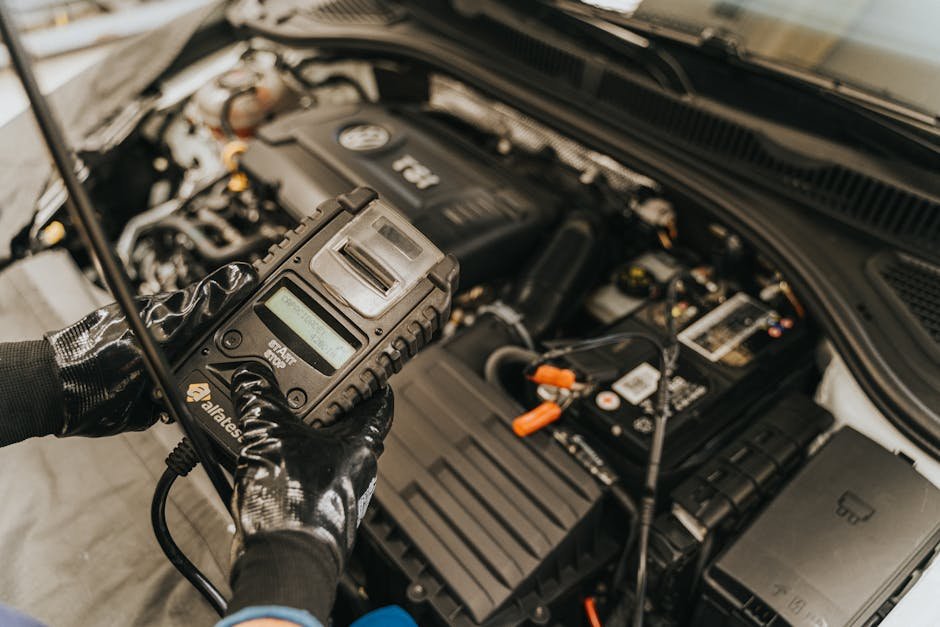
- Step 1 — Confirm the drain exists: We connect a milliamp clamp meter or ammeter in series with the battery negative cable with the car off and all systems asleep (this may take 5–30 minutes for all modules to sleep). We measure total current draw and compare to the normal 20–50 mA.
- Step 2 — Isolate the circuit: With elevated draw confirmed, we pull fuses one at a time while monitoring the ammeter. When the draw drops to normal after pulling a specific fuse, that circuit is identified as the source.
- Step 3 — Identify the component: Within the identified circuit, we inspect the components for the one that’s failing to shut off — stuck relays, stuck modules, damaged wiring, aftermarket accessories.
- Step 4 — Verify the repair: After the repair, we re-measure parasitic draw to confirm it’s within normal range before returning the vehicle.
How Long Does Parasitic Drain Diagnosis Take?
Parasitic drain diagnosis is time-intensive because it requires waiting for all vehicle modules to fully enter sleep mode (sometimes 30+ minutes), then systematically working through the fuse panels. A straightforward case (single blown fuse, obvious aftermarket accessory) may take 1–2 hours. Complex cases involving multiple fuse boxes, numerous modules, or intermittent faults can take 3–4+ hours. We’ll give you a realistic time estimate after the initial assessment.
Schedule a Parasitic Drain Diagnosis
If your battery dies overnight or after a few days of sitting, don’t keep replacing batteries that will only die again. Bring your vehicle to Norm’s Auto Clinic for a proper parasitic drain diagnosis. We’re located at 19 N. Broadway, Coweta, OK 74429. Call (918) 279-8100. We serve Coweta, Broken Arrow, Wagoner, Muskogee, and the greater Tulsa area.