
Your car shouldn’t make noise while driving — at least not the kind that comes from the suspension. Clunking over bumps, creaking on turns, rattling on rough roads, and squeaking from the wheel area are all signs that something in the suspension system needs attention. At Norm’s Auto Clinic in Coweta, Oklahoma, we diagnose and repair suspension problems on vehicles of every make. This guide explains the most common suspension noises, what causes them, and how serious they are.
Understanding Your Suspension System
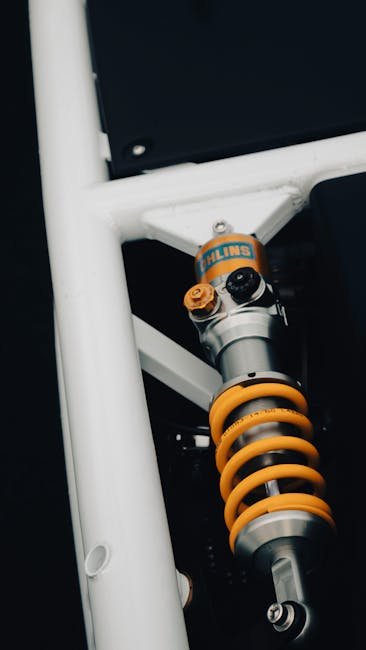
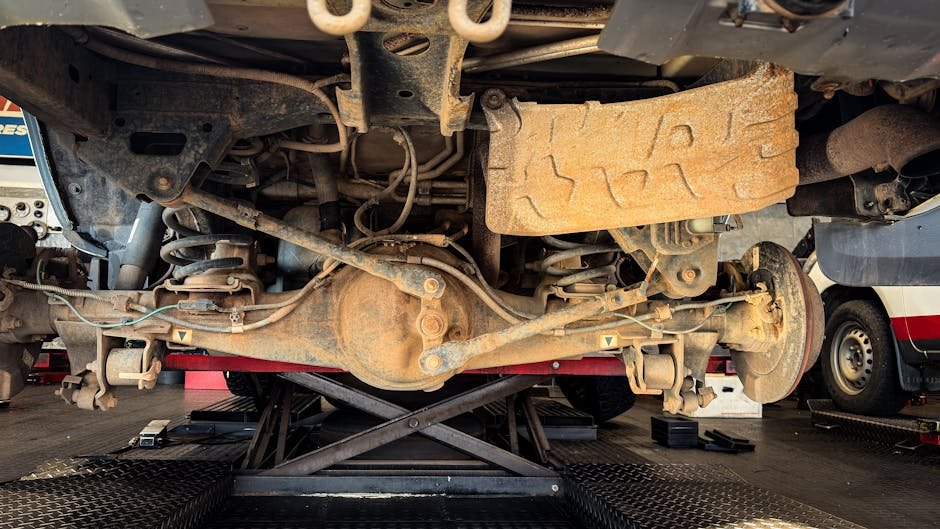
The suspension system has two jobs: keeping your tires in contact with the road (for handling and braking effectiveness) and isolating the cabin from road irregularities (for ride comfort). To do both, the suspension uses a combination of springs (coil springs or leaf springs that support the vehicle’s weight), shock absorbers or struts (that dampen spring oscillation), and a variety of linkage components (ball joints, tie rods, control arms, bushings, sway bar links) that control wheel movement. Any of these components can wear, fail, or loosen — producing characteristic noises.
Common Suspension Noises and What They Mean
Clunking Over Bumps
A clunking sound over bumps — especially potholes and road imperfections — is one of the most common suspension complaints. The causes include: worn ball joints (the ball-and-socket connections between control arms and the steering knuckle), worn strut mounts or top hats (the bearing plate at the top of the strut that allows steering), loose sway bar end links (the rods connecting the sway bar to the control arms), and worn control arm bushings. The clunk happens because a worn component has developed play — when the suspension cycles over a bump, the component moves beyond its normal range and hits a limit stop.
Severity: Ball joint failure can be severe — a completely failed ball joint can separate, causing sudden loss of steering and wheel control. A clunking ball joint should be inspected promptly. Worn strut mounts and sway bar links are less dangerous but compromise ride quality and handling.
Creaking on Turns or Slow Maneuvers
A creaking sound that occurs during slow parking lot maneuvers, when pulling out of a driveway, or when turning the wheel while stationary often indicates worn ball joints, worn control arm bushings, or dry CV axle joints. The creak is the sound of a rubber bushing that has lost its lubricant or a metal-on-metal contact point that has developed wear. On trucks and older SUVs, a creaking front axle is often the front differential — a common issue on high-mileage 4WD vehicles.
Rattling on Rough Roads
A rattling sound over rough pavement can indicate several things: loose heat shields (thin metal plates that protect components from exhaust heat — common on older vehicles), loose sway bar end links (which produce a rattle that changes character with turning), a loose exhaust system component, or severely worn struts. The rattle from loose sway bar end links is particularly distinctive — it often sounds like a metallic knock that gets worse when turning. Heat shield rattles are typically harmless but annoying; sway bar link rattles indicate a worn component that should be replaced.
Squeaking or Squealing from the Wheels
Squeaking from the wheel area has several potential sources. Worn brake pads with wear indicators (metal tabs that contact the rotor) produce a high-pitched squeal that gets louder when braking. Worn wheel bearings produce a grinding or squealing noise that changes pitch with vehicle speed. Dry ball joint or control arm bushing contacts produce a squeak that often correlates with turns or dips. Spring insulator deterioration — the rubber pads at the top and bottom of the coil spring — can also squeak when compressed.
Thudding or Knocking from Under the Car
A deep thud or knock that comes from under the car — felt through the floor as well as heard — often indicates a failed or failing strut. A failed strut allows the spring to bottom out harshly over bumps rather than damping the impact. You may also notice the car bouncing excessively after hitting a bump or leaning excessively in corners. Strut failure is a safety concern because it significantly reduces the vehicle’s ability to maintain wheel contact during emergency maneuvers.
How Serious Is Suspension Noise?
Suspension noise ranges from mildly annoying to genuinely dangerous:
- Urgent — Drive to shop now: Ball joint noise or play (risk of separation), worn tie rod ends (steering loss risk), severely failed struts (cornering and braking compromised)
- Soon — Schedule within 2–4 weeks: Worn strut mounts, worn control arm bushings, loose sway bar links
- Monitor — Next service visit: Heat shield rattle (not safety-related), minor spring squeak, minor bushing creak without play
The challenge with suspension diagnosis is that noises are often intermittent and difficult to reproduce on a lift. We try to recreate the noise during our test drive before putting the vehicle on a lift, and we inspect under load as well as unloaded — some faults only appear with the vehicle’s weight on the suspension.
Suspension Repair at Norm’s Auto Clinic
If you’re hearing unusual sounds from your suspension, bring your vehicle to Norm’s Auto Clinic in Coweta for a suspension inspection. We’ll test drive the vehicle to identify the noise, put it on a lift for a full visual and physical inspection, and give you a written report of what we find before any repairs are recommended. We serve Coweta, Broken Arrow, Wagoner, and the Tulsa area from our shop at 19 N. Broadway, Coweta, OK 74429. Call (918) 279-8100 to schedule.