
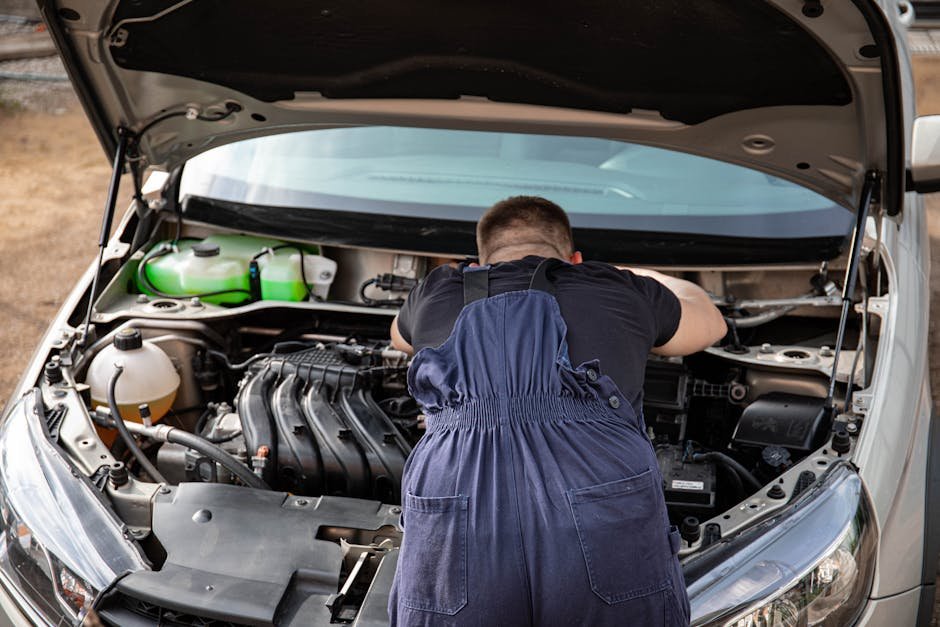
A shaking or vibrating car is more than just uncomfortable — it’s your vehicle telling you that something needs attention. The challenge is that shaking can come from many different systems, from something as simple as an unbalanced tire to something as serious as an engine misfire or failing CV axle. At Norm’s Auto Clinic in Coweta, Oklahoma, we diagnose the root cause of vehicle vibration rather than guessing at parts replacements.
Is the Vibration in the Steering Wheel, Seat, or Pedals?
The location of the vibration is the first diagnostic clue. Before anything else, note where you feel the shaking:
- Steering wheel vibration: Most commonly a front-end issue — tire balance, front wheel bearings, front brake rotors, or front suspension components
- Seat or floor vibration: Often involves the rear wheels, drivetrain, or exhaust system
- Brake pedal vibration when stopping: Warped brake rotors — the most common cause of pedal pulsation
- Whole-car vibration at idle: Usually an engine problem — misfire, engine mount failure, or vacuum leak
8 Common Causes of Car Shaking
1. Unbalanced or Worn Tires
The most common cause of highway-speed vibration. Tires gradually go out of balance as they wear, and a single pothole can knock a wheel significantly out of balance. Unbalanced tires cause steering wheel shimmy typically between 55–70 mph. Tire rotation and balancing together (–) often resolves this completely. Worn tires with uneven wear patterns can cause vibration even when balanced — the tire itself needs replacement.
2. Warped Brake Rotors
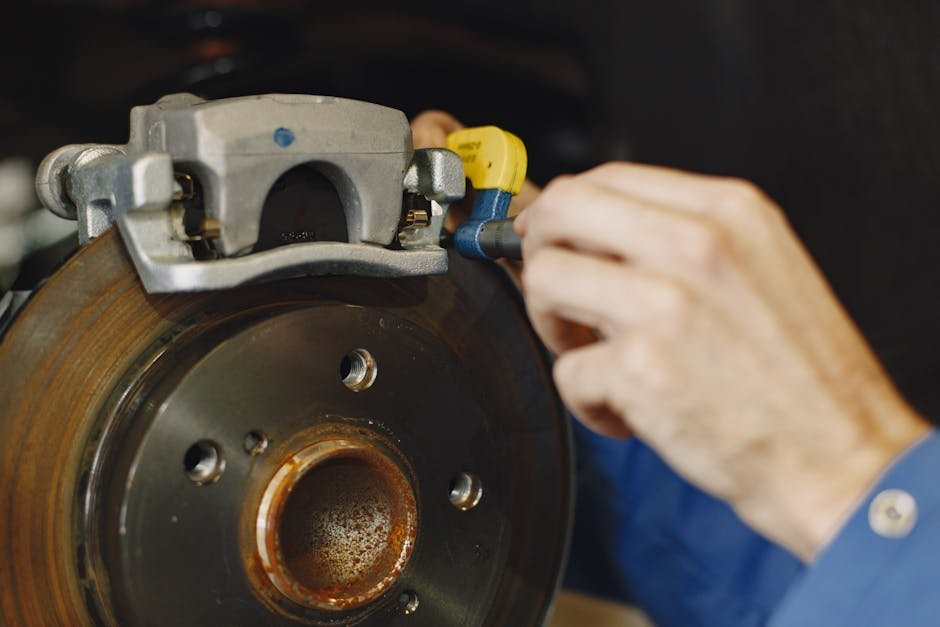
If the vibration or pulsation is felt primarily when braking, warped rotors are almost certainly the cause. Rotors warp from heat cycling — aggressive braking followed by rapid cooling (like driving through water). You’ll feel a rhythmic pulsation in the brake pedal and sometimes the steering wheel when stopping. Rotor resurfacing or replacement with brake pad replacement resolves this (– depending on vehicle).
3. Wheel Bearings
A failing wheel bearing often presents as a humming, grinding, or rumbling sound that changes with vehicle speed or turning — but as it worsens, it can also cause vibration. The classic test is swerving gently at highway speed: if the vibration/noise changes, a wheel bearing is suspect. Wheel bearing replacement runs – per corner and should not be delayed — a failed bearing can cause catastrophic wheel separation.
4. CV Axle or Drive Shaft Issues
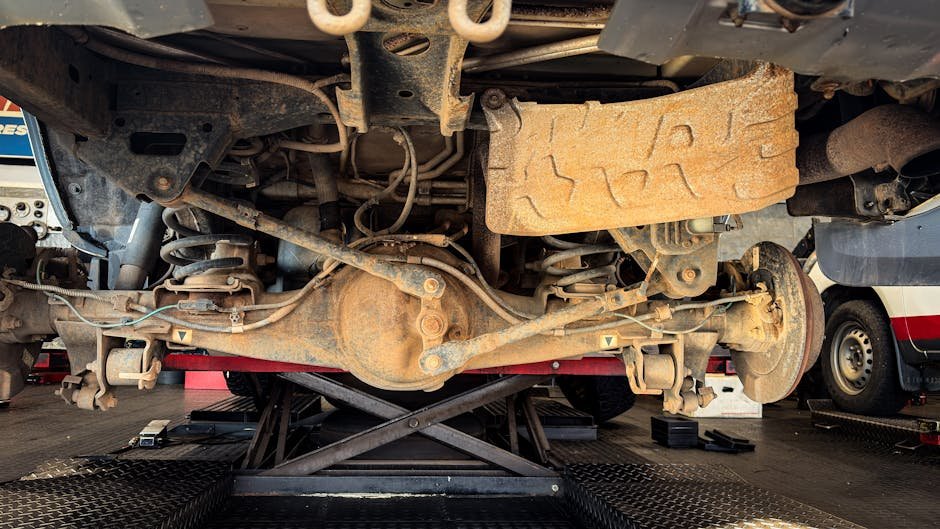
Front-wheel drive vehicles with failing CV (constant velocity) joints typically develop a clicking sound during turns that progresses to vibration during acceleration. A torn CV boot (the rubber boot protecting the joint) allows grease to escape and contaminants to enter — accelerating joint failure. CV axle replacement runs – per side. On rear-wheel drive vehicles, driveshaft imbalance or U-joint failure causes similar vibration, often felt through the whole vehicle at highway speed.
5. Engine Misfire
A misfiring cylinder causes the engine to run roughly and unevenly, creating vibration felt most strongly at idle or low speeds. It often accompanies a check engine light. Causes include spark plugs, ignition coils, injectors, or compression issues. The vibration from a misfire typically improves at higher RPMs but is pronounced at idle.
6. Broken or Worn Engine or Transmission Mounts
Engine and transmission mounts isolate the drivetrain’s normal vibration from the passenger compartment. When they wear or break, you’ll feel noticeable vibration — especially at idle, during acceleration, or when shifting into gear. The vibration may be accompanied by a clunk when putting the car in drive or reverse. Mount replacement runs – per mount.
7. Bent Wheel or Rim
Hitting a pothole or curb can bend a wheel rim, causing a rhythmic vibration that a tire balance alone won’t fix. A bent rim may be visible on inspection, or it can be detected by spinning the tire on a balancing machine and observing the run-out. Depending on severity, rim straightening (–) or replacement is needed.
8. Suspension and Steering Component Wear
Worn ball joints, tie rods, control arm bushings, or strut mounts can allow wheel movement that creates vibration, especially over bumps or during acceleration. These components are checked during a suspension inspection and should be addressed before they compromise steering and handling safety.
Let Norm’s Find the Source
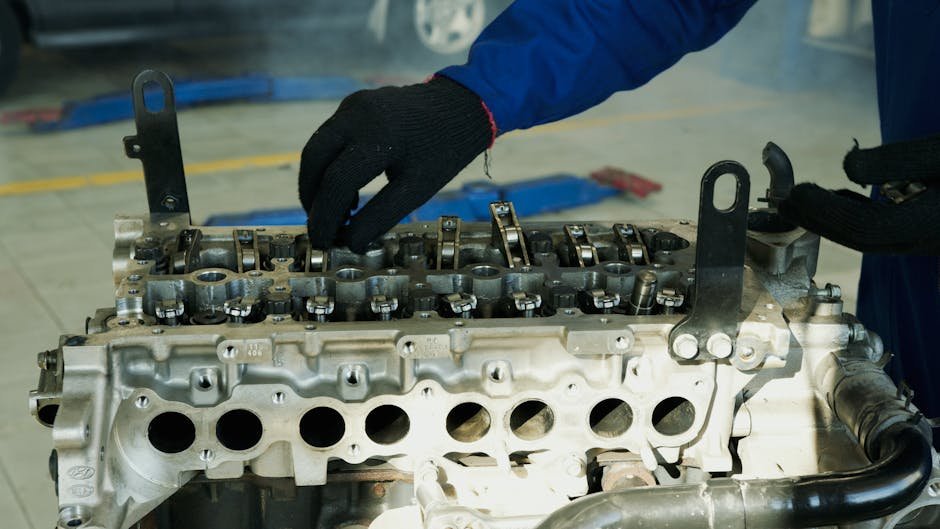
Vibration diagnosis is a process of elimination. At Norm’s Auto Clinic, we start with a road test and visual inspection to narrow down the likely systems, then systematically test components — tires, brakes, bearings, suspension — until we identify the root cause. We explain what we find and provide a written estimate before beginning any work.
We’re located at 19 N. Broadway, Coweta, OK 74429. Call (918) 279-8100 — serving Coweta, Broken Arrow, Wagoner, Muskogee, and the greater Tulsa metro area.