
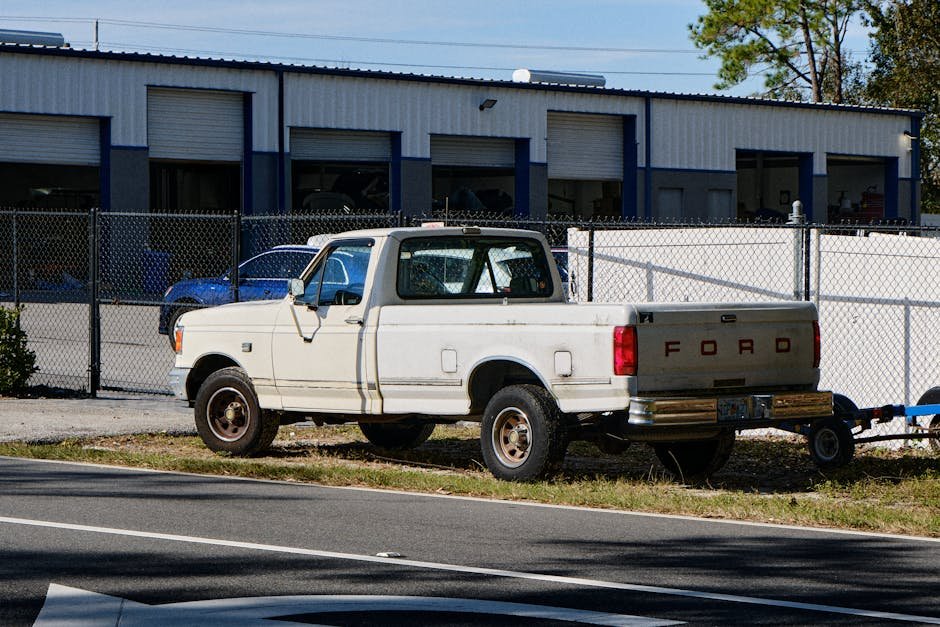
The Ford F-150 has been America’s best-selling truck for over four decades — and in Oklahoma, it’s everywhere. Whether you drive a classic 5.0 V8, a modern EcoBoost, or a diesel PowerStroke, keeping your F-150 maintained is the key to getting maximum life from your investment. At Norm’s Auto Clinic in Coweta, Oklahoma, we service more F-150s than any other vehicle, and we know exactly what these trucks need — and when they need it.

F-150 Engine Options and Maintenance Differences

The F-150’s engine lineup spans three distinct types, each with its own maintenance requirements. Knowing which engine you have determines the right oil type, interval, and service schedule:
- 5.0L Ti-VCT V8: Ford’s naturally aspirated V8. Uses 5W-20 or 5W-30 conventional or synthetic. Oil change every 5,000–7,500 miles with synthetic. A robust, relatively simple engine that rewards consistent oil changes.
- 2.7L EcoBoost V6: Turbocharged and direct-injected. Requires synthetic oil — 5W-30. Change every 7,500 miles in normal conditions; 5,000–6,000 if you tow or use it hard. The turbochargers demand clean oil to prevent coking on the bearings.
- 3.5L EcoBoost V6: Same turbo/DI requirements as the 2.7. More displacement means more torque — excellent for towing — but the same strict oil change discipline. Carbon buildup on intake valves is a known issue on direct-injection engines; walnut blasting at 60,000–80,000 miles is recommended.
- 3.3L Ti-VCT V6: The base engine. Conventional or synthetic, 5W-20. Reliable but modest; straightforward maintenance schedule.
- 3.0L PowerStroke diesel: Diesel-specific oil (5W-30 diesel spec), longer intervals (10,000 miles), but diesel fuel filter changes every 15,000 miles are critical.
Ford F-150 Maintenance Schedule for Oklahoma Drivers
Ford’s Intelligent Oil-Life Monitor adjusts oil change intervals based on driving conditions. In Oklahoma’s heat and dust, and with the heavy use many trucks see (towing, hauling), we recommend not waiting until the monitor hits 0%. Change oil at 15–20% remaining or at the mileage intervals below:
- Every 5,000–7,500 miles: Oil and filter change; tire rotation; multi-point inspection
- Every 15,000–20,000 miles: Air filter inspection; cabin air filter; brake inspection; check all fluids
- Every 30,000 miles: Transmission fluid inspection (change if dirty); differential fluid service; transfer case fluid (4WD models)
- Every 60,000 miles: Spark plugs (EcoBoost models — spec plugs required, don’t cheap out); serpentine belt inspection; coolant condition check
- Every 100,000 miles: Coolant flush; full suspension inspection; oxygen sensor assessment; fuel injector cleaning (EcoBoost)

The F-150 Issues We See Most Often in Oklahoma
- EcoBoost carbon buildup: Direct injection doesn’t clean intake valves with fuel wash — carbon accumulates over 60,000–80,000 miles, causing rough idle and power loss. Walnut shell blasting cleans valves effectively.
- Rear differential leak: Oklahoma’s heat and towing cycles stress differential seals. A seeping rear differential caught early is a – seal job; ignored until the fluid is gone, it’s a ,500+ differential repair.
- Spark plug seizure: 2004–2008 F-150s with the 5.4L 3-valve engine have notoriously problematic spark plugs that can break off during removal. Use a spark plug extractor kit or let an experienced mechanic handle them.
- Blend door actuator: A clicking sound from the dash — especially on temperature changes — is a common F-150 issue across many model years. The actuator motor fails and causes inconsistent or inoperative climate control.
- Exhaust manifold leaks: A ticking sound from the engine compartment that changes with temperature is often an exhaust manifold stud failure — common on 5.4L and some 5.0L F-150s.
F-150 Transmission Service
Ford’s 6R80 six-speed automatic and the newer 10R80 ten-speed are excellent transmissions when fluid is maintained. Ford calls the fluid “lifetime” in the 10-speed, but towing and heat dramatically shorten that life. We recommend inspection and drain-and-fill service every 40,000–60,000 miles — use Ford-spec Mercon LV or Mercon ULV fluid only. Using the wrong ATF causes immediate shuddering and accelerated wear.
Ford F-150 Service in Coweta, Oklahoma

Whether your F-150 is your daily driver, your work truck, or your weekend tow vehicle, Norm’s Auto Clinic in Coweta knows these trucks inside and out. We’re located at 19 N. Broadway, Coweta, OK 74429, serving F-150 owners throughout Wagoner County, Broken Arrow, Muskogee, and the Tulsa area. Call (918) 279-8100 to schedule service.