

The Honda Pilot is a full-size three-row SUV that many Coweta and Wagoner County families depend on for daily driving, sports trips, and cross-state travel. It’s capable, comfortable, and when maintained properly, can last well over 200,000 miles. At Norm’s Auto Clinic in Coweta, Oklahoma, we service Honda Pilots regularly and know exactly what these vehicles need to stay reliable through Oklahoma’s demanding climate.

Honda Pilot Maintenance Schedule

Honda Pilots use the Maintenance Minder system on 2009 and newer models. However, Oklahoma’s summer heat and stop-and-go driving qualify as “severe service” conditions, which shortens the recommended intervals below the maximum Minder display. Don’t wait for the Minder to hit 15% — service your Pilot at the intervals below.
Every 5,000 Miles / 6 Months
- Engine oil and filter change (5W-20 full synthetic for most Pilot generations)
- Tire rotation (Pilots are heavy — uneven wear happens quickly without rotation)
- Multi-point inspection: brakes, fluids, belts, battery
Every 15,000–30,000 Miles
- Cabin air filter replacement
- Engine air filter inspection
- Brake pad and rotor inspection
- Fluid check: coolant, brake fluid, power steering
- AWD rear differential fluid change (every 30,000 miles in AWD models)
Every 30,000–60,000 Miles
- Automatic transmission fluid change (Honda-spec fluid only — do not use generic ATF)
- Brake fluid flush
- Spark plug inspection
- Serpentine belt inspection
- Coolant test for acidity and freeze protection
Every 60,000–100,000 Miles
- Spark plug replacement
- Coolant flush and refill
- Full suspension inspection: struts, ball joints, tie rod ends, CV axle boots
- Timing chain tensioner inspection (Pilot engines use chains)
- Fuel system inspection
Common Honda Pilot Problems
1. VCM (Variable Cylinder Management) Oil Consumption
The 3.5L V6 in 2005–2015 Pilots uses Honda’s Variable Cylinder Management system, which deactivates 3 cylinders during light load driving to improve fuel economy. While this works as designed, a side effect is that some VCM-equipped Pilots consume oil — up to a quart every 1,000–2,000 miles in severe cases. The mechanism relates to cylinder deactivation causing changes in valve timing that can draw oil past the valve seals over time.
The fix: Check oil monthly and top up as needed, use full synthetic 5W-20, and consider a VCM disabler (an aftermarket device that prevents cylinder deactivation, available for about ). Many Pilot owners report significantly reduced oil consumption after installing a VCM disabler. If oil consumption is severe, valve stem seal replacement may be needed.
2. Transmission Judder / Shudder (2009–2015)
The 5-speed automatic transmission in 2nd generation Pilots (2009–2015) is prone to torque converter lock-up shudder — a vibration between 25–45 mph that feels like driving on a rumble strip. This is often resolved by a transmission fluid drain and refill using Honda Genuine ATF-DW1. If the shudder persists after a fluid change, the torque converter clutch may require replacement. Do not ignore this — it can progress to full transmission failure.
3. Power Steering Pump Noise
The hydraulic power steering pump on 2003–2008 Pilots (first generation) develops a whining noise when cold, especially during sharp turning. This is usually low power steering fluid or a pump nearing the end of its service life. Flushing the power steering system and refilling with Honda’s power steering fluid often reduces the noise. Complete pump failure requires replacement — budget –.
4. Oxygen Sensor and Catalytic Converter Codes
Like all Honda V6 vehicles, the Pilot’s oxygen sensors fail around 100,000–130,000 miles, triggering P0136, P0420, or similar codes. A P0420 (catalyst efficiency below threshold) is often caused by a failed upstream O2 sensor that allows the catalytic converter to run rich — not necessarily a failed converter. Have the O2 sensors inspected before replacing the catalytic converter, as the sensor replacement (–) often clears the code.
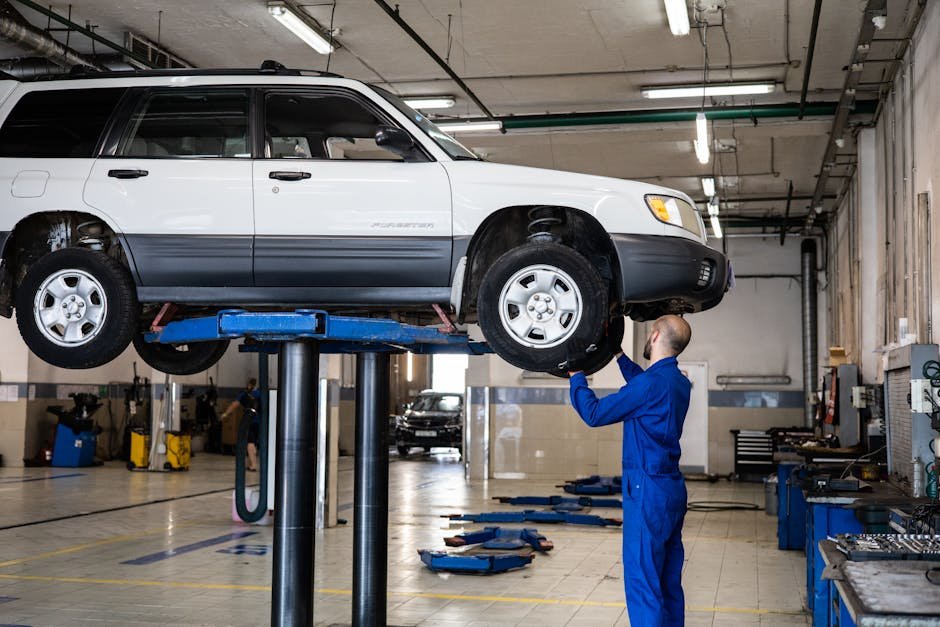
Honda Pilot in Oklahoma Heat
The Pilot’s large cabin and powerful AC system work hard in Oklahoma summers. The compressor and condenser see sustained load from May through September. Annual AC system inspections before summer — checking refrigerant charge, condenser condition, and compressor clutch — prevent the failure of a –,200 compressor replacement at the worst time of year.
Oklahoma’s clay and gravel roads also accelerate brake pad wear on the heavy Pilot. Expect front pads to last 35,000–50,000 miles depending on driving style. Rear pads last longer but tend to seize in the calipers if not inspected annually — seized rear calipers on a Pilot can cost – per side to repair.
Honda Pilot Service at Norm’s Auto Clinic
We service all Honda Pilot generations at 19 N. Broadway, Coweta, OK 74429. From the first-gen 2003–2008 Pilots with hydraulic steering to the 2019+ Pilot with the 9-speed automatic, our ASE-certified team handles routine maintenance and complex repairs with equal expertise.
Coweta, Broken Arrow, Wagoner, and Muskogee Pilot owners rely on us for honest service and fair pricing. Call us at (918) 279-8100 to schedule your next service.