
What Is an OBD-II Scanner?
OBD-II stands for On-Board Diagnostics, second generation. Since 1996, every car sold in the United States — check engine light explained — has been required has been required to include an OBD-II port — a standardized 16-pin connector usually located under the dashboard on the driver’s side. This port gives access to the vehicle’s onboard computer network.
An OBD-II scanner is a device that plugs into this port and reads the data stored by your vehicle’s Engine Control Module (ECM) and other onboard computers — related: our engine diagnostic service. When something goes wrong and a warning light appears on your dashboard, the scanner can retrieve the Diagnostic Trouble Code (DTC) that triggered it.
Understanding what these codes mean — and what they don’t mean — can save you hundreds of dollars and help you make informed decisions about auto repair.

How OBD-II Scanners Work
Your vehicle’s computers continuously monitor sensors throughout the engine, transmission, emissions system, ABS, airbags, and more. When a sensor reading falls outside acceptable parameters, the computer stores a fault code and (for emissions-related faults) illuminates the check engine light.
The OBD-II scanner communicates with these computers using one of five standardized protocols. Basic scanners simply read and clear codes. Advanced professional-grade scanners can view live sensor data, perform actuator tests (like cycling solenoids), reset adaptation tables, and access manufacturer-specific modules beyond the standard OBD-II scope.
Consumer vs. Professional Scan Tools: What’s the Difference?
- Basic code readers (–): Read and clear DTCs. Show code number and a brief description. Good for identifying why your check engine light is on and clearing it after repair.
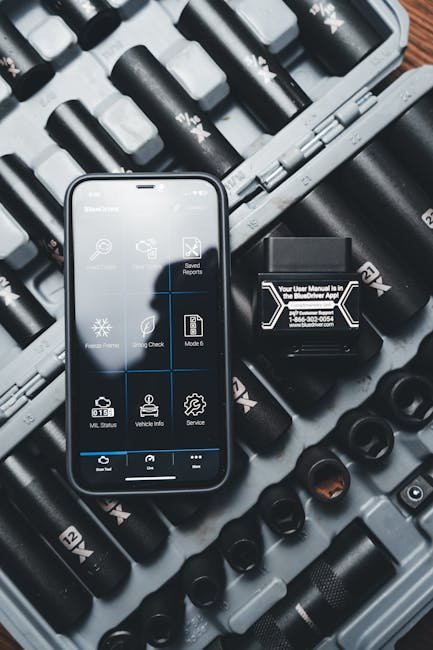
- Mid-range bluetooth scanners (–): Connect to your smartphone. Show live sensor data (engine RPM, coolant temp, fuel trim). Apps like Torque Pro or OBD Fusion add graphing capability.
- Enthusiast/prosumer scanners (–): Bi-directional control, enhanced manufacturer codes, ABS/airbag access. Brands like Autel, Launch, and Foxwell.
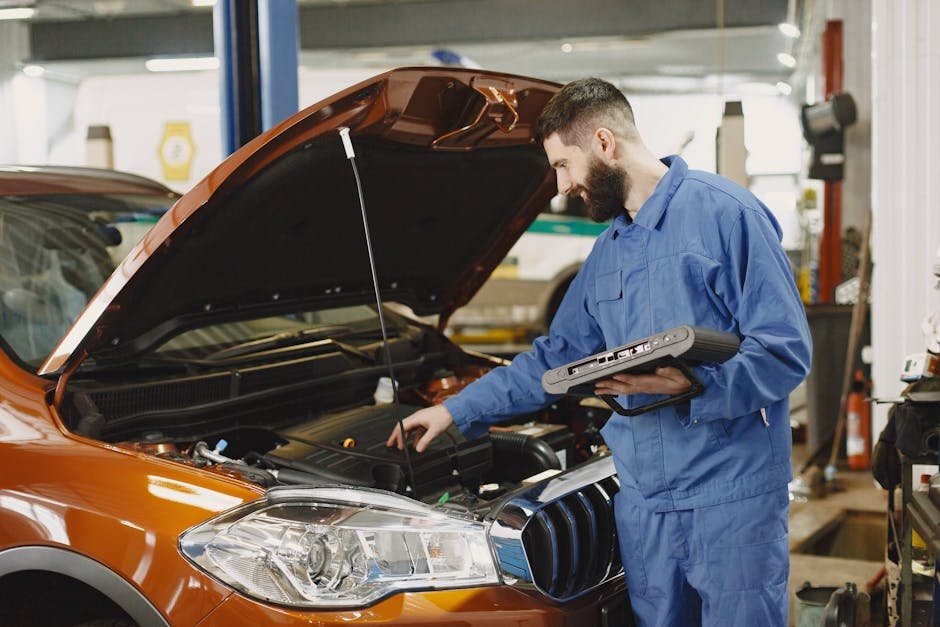
- Professional shop-grade (–,000+): Full OEM-level access to all modules. Can reprogram ECUs, calibrate ADAS cameras, perform guided diagnostics. This is what Norm’s Auto Clinic uses for complex repairs.
Reading a Fault Code: What the Numbers Mean
OBD-II codes follow a standardized format: one letter followed by four digits. The letter indicates the system: P (Powertrain), B (Body), C (Chassis), U (Network). A zero in the second position means it’s a generic OBD-II code; a 1 means it’s manufacturer-specific.
- P0300: Random/multiple cylinder misfire detected
- P0171: System too lean (Bank 1) — could be vacuum leak, MAF sensor, or fuel issue
- P0420: Catalyst system efficiency below threshold (Bank 1) — commonly the catalytic converter
- P0442: Evaporative emission system small leak — often just a loose gas cap
- P0507: Idle air control system RPM high — throttle body or IAC issue
- P0562: System voltage low — battery or charging system problem
Why a Code Doesn’t Tell the Whole Story
One of the most important things to understand about OBD-II codes is that they identify which system triggered a fault — not what caused it. A P0171 (lean condition) could be caused by a vacuum leak, a dirty mass airflow sensor, a failing fuel pump, a clogged injector, or a faulty oxygen sensor.
This is why auto parts store ‘free code scans’ can be misleading. The person reading the code may tell you ‘it’s the oxygen sensor’ based solely on the code, but replacing the oxygen sensor without diagnosing the root cause just replaces a sensor that was accurately reporting a real problem.
Professional diagnosis involves testing the components implicated by the code to confirm the actual failure before parts are ordered. At Norm’s Auto Clinic, we never recommend parts replacements based on codes alone.
Can You Clear Codes Yourself?
Yes — any OBD-II scanner can clear stored codes, which also turns off the check engine light. However, clearing a code doesn’t fix the underlying problem. The light will return within one to three drive cycles if the issue persists.
Clearing codes also resets the vehicle’s emissions ‘readiness monitors.’ These monitors need to complete their drive cycles before your vehicle will pass an Oklahoma emissions test. If you recently cleared codes, you may need to drive the vehicle for several days under varied conditions before all monitors complete.
Clear codes only after you’ve performed a repair. If you clear them without fixing anything, you’ve just temporarily turned off the warning light.
Oklahoma Emissions Testing and OBD-II
Tulsa County (and some surrounding counties) require biennial OBD-II emissions testing for vehicles 1996 and newer. The test connects a scanner to your OBD-II port and checks that all readiness monitors are complete and no fault codes are stored.
Common reasons for failing Oklahoma emissions tests: stored fault codes (even without a lit check engine light), incomplete readiness monitors (drive more before testing), or a catalytic converter below efficiency threshold (P0420).
If your vehicle is failing emissions, bring it to Norm’s Auto Clinic. We diagnose and repair emissions-related issues regularly and can help you understand what repairs are needed to get your vehicle compliant.
When to Bring Your Vehicle to a Professional
Use a basic code reader to get a starting point, but bring your vehicle to Norm’s Auto Clinic in Coweta for professional diagnosis when: the check engine light is flashing (active misfire), you have multiple codes stored simultaneously, the same code keeps returning after clearing, or the code relates to a safety system like ABS or airbags.
We use professional-grade diagnostic tools that access manufacturer-specific data beyond the generic OBD-II standard. Our technicians don’t just read codes — we diagnose root causes and give you an honest recommendation for repair.
Call (918) 279-8100 or visit us at 19 N. Broadway, Coweta, OK 74429. Serving Coweta, Broken Arrow, Wagoner, Muskogee, and the Tulsa metro area.